
Whether a piece of land is suitable for development has never been about whether the land is large enough, but rather whether the underlying development logic is truly sound.
Many development sites on the market, once they reach an area of 2,000 or 3,000 square meters or more, easily evoke images of subdivided plots, multi-family housing, or even other high-density development possibilities. However, from a professional town planning perspective, judging whether a piece of land has true development value should never be based solely on area or conceptual drawings. Instead, it is essential to progressively examine its servicing, access, topography, and the corresponding planning controls and approval pathways.
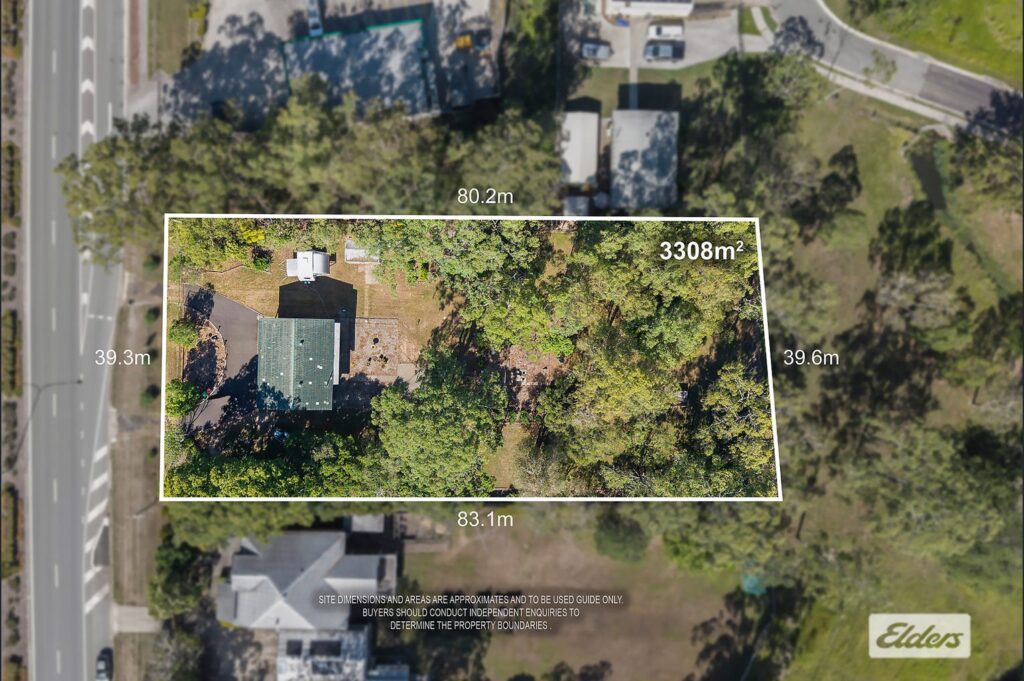
Taking the Cornubia site as an example, it seems to have considerable development potential on the surface, with a land area of approximately 3,000 square meters. However, upon closer analysis, there are several aspects that require careful consideration. These factors not only affect the final number of lots that can be allocated, but also directly influence the design complexity, approval prospects, construction costs, and ultimately, whether the project can be truly implemented.
First, the sewer on this site is located outside the property boundaries. This means that sewage connection may not be directly resolved within the owner's own land area, but may require external conditions, and even involve cooperation from third-party land or infrastructure arrangements. For development projects, this type of servicing constraint is often more practical than zoning. This is because zoning only reflects the theoretical direction of development, while infrastructure conditions such as sewer, stormwater, and access truly determine whether the plan can be implemented, approved, and completed. Once the servicing path itself is uncertain, the entire project's design, cost control, construction time, and the buyer's control will all be significantly affected.
Secondly, the site is adjacent to a service station. Such adjacent uses are generally not ideal for residential outcomes. From the perspectives of living environment, design buffers, potential environmental factors, and future market acceptance, they can make the entire project more difficult to manage. Even if the planning regulations don't necessarily prohibit residential development entirely, if the adjacent use itself carries certain restrictions, it usually means that more design solutions are needed, and more factors may be considered during the approval process. In other words, even if a residential plan can be drawn up on paper, whether the final completed product will truly be attractive and meet market expectations remains highly questionable.
Third, the site's zoning is a small lot, and within this zoning framework, a rear lot cannot be used. This means that to advance development, a true internal road is needed to support the overall layout. However, the problem is that the site connects to a state-controlled road, which generally has many restrictions on adding entrances or intersections and may not easily gain support. Once access cannot be established, many subsequent development assumptions may no longer hold true. This illustrates that many sites may appear to have several lots, but in reality, if the access plan fails, the entire project's development foundation could be immediately shaken.
Fourth, the site itself has a certain risk of flooding. Land at risk of flooding doesn't necessarily mean it's completely undevelopable, but it will almost certainly increase the difficulty of design and approval processes, and may also drive up construction costs. For example, floor leveling, stormwater management, building layout, and civil engineering treatments may all become more complex. For investors, the most noteworthy aspect of this type of risk is that it may not be fully reflected in sales materials, but will often be directly reflected in costs and timelines when actually implementing the project.
Fifth, the site itself slopes downwards. The issue of sloping terrain should never be underestimated in development assessments, as it directly impacts drainage, earthwork, retaining walls, driveway design, and the overall building layout. Many conceptual plans may seem feasible on plan, but once applied to actual terrain, the design constraints become far greater than anticipated. Especially when sloping terrain, drainage, and access issues arise simultaneously, the overall development difficulty is often not simply the sum of individual factors, but rather a cumulative effect, making what appears reasonable on paper extremely difficult to implement in practice.
Therefore, when evaluating a development site, I never prioritize the number of lots that can be drawn on paper, but rather the servicing, access, terrain, and whether the planning path is truly feasible. Whether these factors are aligned truly determines whether the project is a golden opportunity or a beautifully packaged but actually highly risky investment.
For investors genuinely interested in purchasing development sites, the greatest danger is never the lack of potential of the land, but rather mistaking a conceptual possibility for a stable, executable development outcome. Whether a project is viable should not be judged solely by the zoning summary or the conceptual drawings provided by the broker, but must be assessed holistically, taking into account servicing feasibility, access feasibility, terrain conditions, adjacent uses, and the Council's potential approval approach.
This is precisely where the true value of pre-purchase due diligence lies. Truly professional analysis doesn't involve telling more compelling stories about the property; rather, it helps buyers identify which development paths are truly viable, which are merely theoretically possible, and which are simply impossible to achieve due to servicing, access, or other objective limitations. For development-oriented buyers, this type of analysis is often more important than any marketing hype, because the return on investment ultimately comes not from concepts, but from implementable solutions.
Professional due diligence is the most reliable guarantee for investing in development land. The development potential of Brisbane and its surrounding areas is undeniable, but the more a site involves subdivision, multi-unit, or other residential development, the more crucial it is to conduct thorough zoning, planning, servicing, and legal due diligence before purchasing. Only by clearly understanding all limitations and risks before entering the market can investment decisions be built on a truly solid foundation.
If you wish to conduct a more in-depth analysis of individual development sites from the perspectives of town planning, land development, and investment risks, you should consider seeking the assistance of a professional team before purchasing. Through systematic site analysis and due diligence, you can first confirm whether the development path is truly feasible before deciding whether to proceed.
This article is for general informational purposes only and does not constitute legal, planning, or investment advice. Individual cases require consultation with professionals based on actual zoning, planning controls, servicing conditions, and regulatory requirements.




 Chinese