
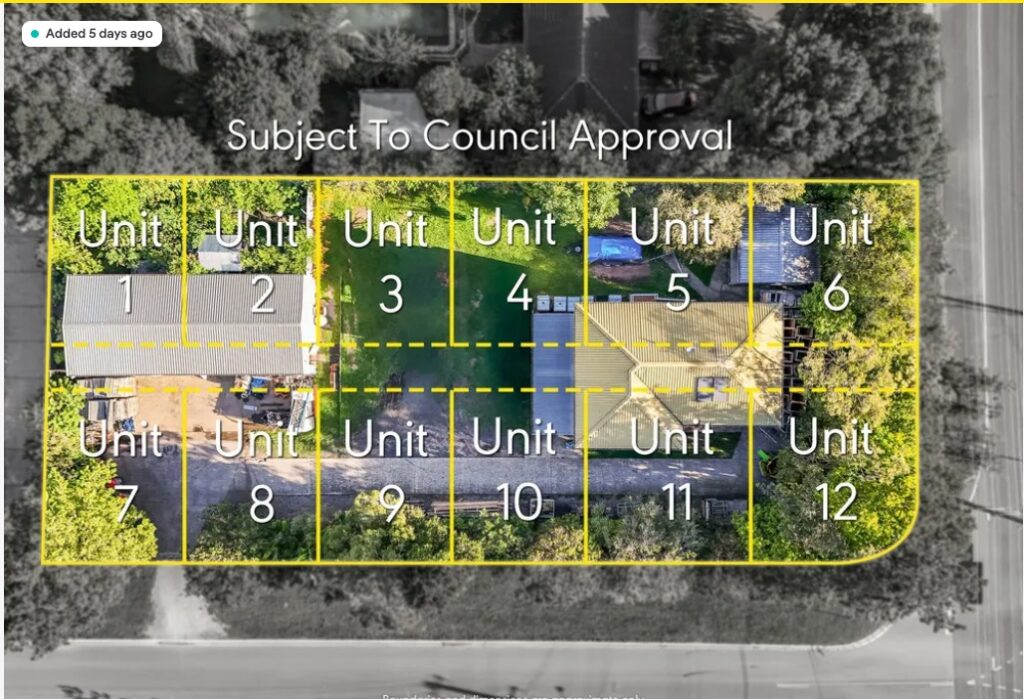
The most important thing for a development site is never "how much potential can be discussed", but whether each development path is actually feasible.
Many development site advertisements in the market often mention different directions such as subdivision, multi-unit, land banking, and future upside, which on the surface seem to offer many options and make the project seem flexible and have great potential. However, from a professional town planning perspective, the real question is never "can we talk about it?" but rather "does each path have a complete and feasible planning basis, approval logic, and infrastructure feasibility?"
When I conduct site analysis, I don't start by looking at how attractive the concept map is, nor am I swayed by marketing hype. The first step is always to break down the development options themselves, clarifying which zoning, planning controls, and approval pathway each option corresponds to. For example, some projects may superficially mention both divisible land and multi-unit development, seemingly indicating greater potential. However, these often belong to completely different development logics and cannot be mixed or simply combined into a single "potential."
In other words, even if a site is described as having "multiple development possibilities" from a sales perspective, it doesn't mean that every development option is viable under actual planning regulations. Different uses, densities, and built forms may all face completely different assessment benchmarks, neighborhood contexts, access, servicing, and council attitudes. If investors don't clarify this point first, they can easily mistake "conceptual possibilities" for "feasible solutions."
Looking deeper, the real factors affecting whether such projects can be implemented are usually not just zoning.
Taking this site as an example, the core issue that deserves more attention is the legal point of discharge. If the site itself does not have a legal drainage outlet, the entire project may need to rely on third-party land, third-party consent, and even external infrastructure conditions from the outset. This is crucial because once the project needs to rely on a third party, it means that the buyer may not have complete control over the development. Subsequently, everything from design schemes, application timelines, engineering costs, negotiation strategies, to whether it can ultimately proceed, may be affected by external factors.
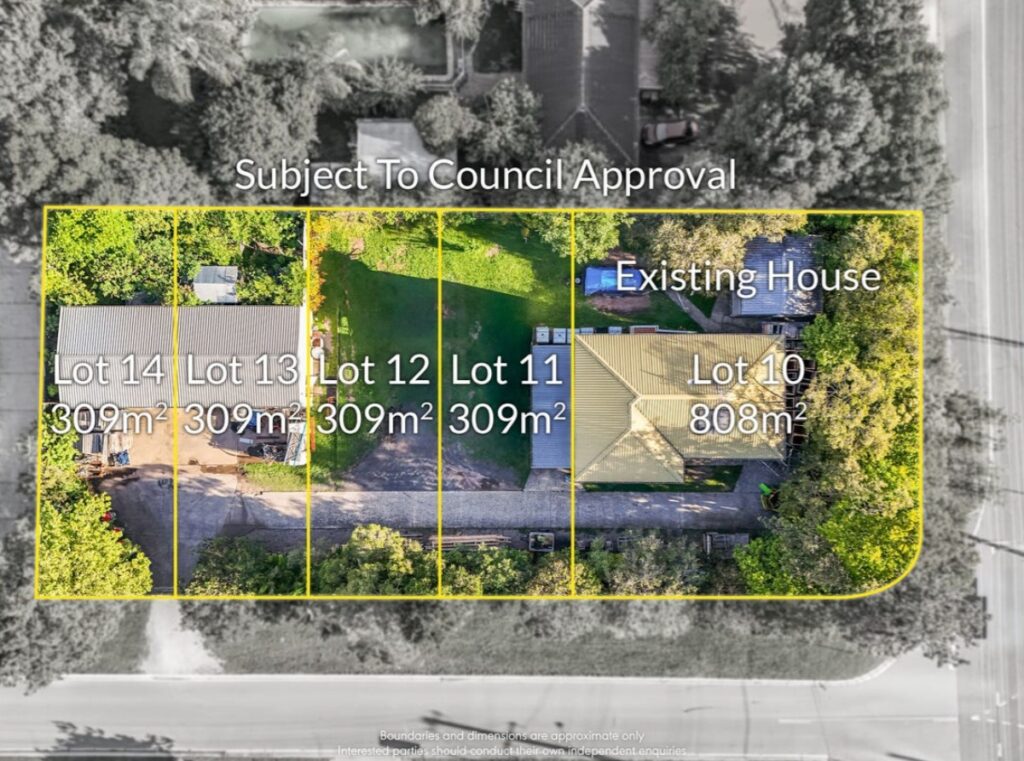
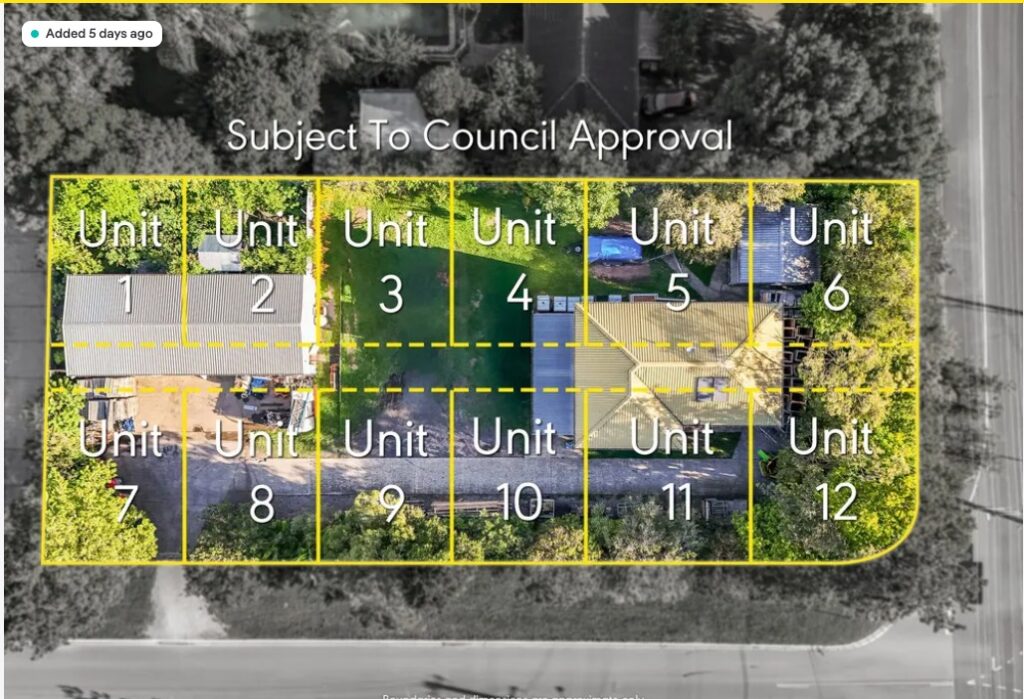
Many people underestimate the importance of servicing feasibility, believing that suitable zoning equates to feasibility. However, without a feasible stormwater solution, a clear access arrangement, and a verifiable infrastructure pathway, even the most ideal planning concept may remain merely on paper. For development sites, planning feasibility and servicing feasibility are always considered together. The former determines whether you can theoretically apply for approval, while the latter determines whether you can actually build the site.
Looking at the DA status of this site, the situation appears even more conservative. Based on current indications, the Council's attitude towards the application seems unsupportive, leaving the entire application stalled. If a project's approval pathway is encountering significant obstacles, coupled with fundamental issues like a legal point of discharge, its development opportunity cannot be judged solely based on sales plans or advertising wording. From a risk perspective, this type of project may not be suitable to be described as "high potential"; rather, it should be considered a project requiring highly careful evaluation.
This is precisely the value of pre-purchase due diligence.
Truly professional real estate analysis is never about piling up compelling stories about a property; it's about dissecting risks for buyers, identifying which paths are truly feasible, which are merely theoretical, and which are practically constrained by council position, servicing limitations, or third-party coordination. For buyers, the greatest danger isn't a site lacking potential, but rather mistaking a flawed or highly dependent path for a stable development outcome.
In the Brisbane market, development sites have always attracted investor attention, but the more "intriguing" a project seems, the more cautious one needs to be. This is especially true for projects involving redevelopment of older buildings, multi-family developments, laneway drainage, corner lots, irregularly shaped lots, or those requiring cross-site infrastructure coordination. It's crucial not to rely solely on zoning summaries or agent brochures. A truly responsible analysis should consider zoning interpretation, planning assessment, council risk, stormwater strategy, access arrangement, and legal constraints together to gain a clearer understanding of the project's execution reality.
I've always believed that the most important aspects of site analysis are not theoretical potential, but rather the planning path, servicing feasibility, and execution reality. These are all part of due diligence and are often more important than "whether the market thinks it's easy to sell." Because for investors who are actually going to invest, returns don't come from concepts, but from feasible solutions.
Professional due diligence is essential for protection. The development potential of Brisbane's housing market is undeniable, but the more a property involves development, the less one should rely on intuition or sales pitches. Conducting thorough zoning, planning, servicing, and legal due diligence before purchasing, coupled with professional advice from planners and lawyers, can significantly reduce the risks of buying the wrong land, misjudging the development path, or overestimating development opportunities.
ANP is familiar with analytical frameworks for different types of development sites in Brisbane and Queensland, and works closely with professional town planners, lawyers, and other advisors to provide clients with pre-purchase due diligence, development feasibility analysis, and investment assessment services. For buyers who truly value risk management, the value of a professional team lies not in exaggerating the potential, but in clearly identifying the infeasibility, helping clients grasp the reality before entering the market.
In terms of professional teams, ANP brings together experts from various fields in Australia and Hong Kong, including urban planners, real estate consultants, land development consultants, lawyers, bankers, registered immigration agents and market analysts. From market research and planning assessment to development management, they provide clients with more comprehensive and prudent real estate investment support, helping to base every decision on verifiable professional analysis.
This article is for general informational purposes only and does not constitute legal, planning, or investment advice. Individual cases require consultation with professionals based on specific zoning, planning controls, servicing conditions, and Council requirements.






 Chinese