
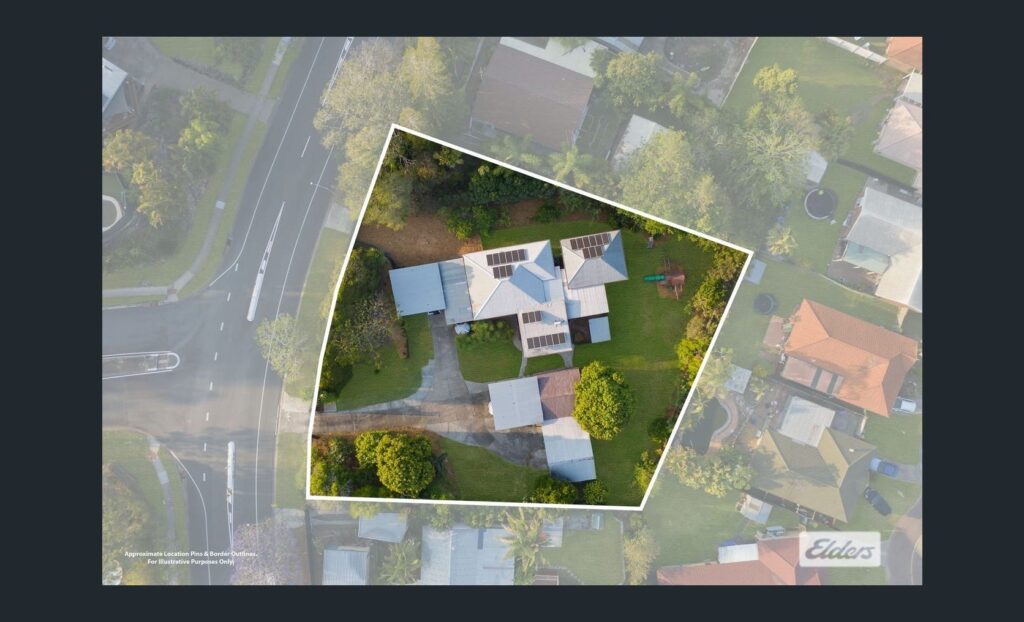
A development site cannot be simply considered "potentially feasible" just because it has more than 2,000 square meters. What truly needs careful evaluation is never the area itself, but whether access, stormwater, and servicing can work together to form a reasonable and feasible development path.
At first glance, these types of land plots often seem to have considerable development potential. However, further analysis reveals that the most difficult aspect is not zoning itself, but rather the actual implementation conditions. In other words, theoretical development potential does not equate to practical feasibility; what truly determines the success or failure of a project often lies in the technical and approval issues that may not be fully explained in sales promotions.
First, the terrain and road arrangement themselves are not ideal. Even if the road ahead is not state-controlled, the council may not support a three-way entrance/exit with multiple driveways. For any development project, once access is restricted, the flexibility of the entire layout is immediately and drastically reduced. Many solutions that seem feasible on the concept drawings will actually lose their operational scope precisely because the access arrangement is not feasible. This also illustrates that development analysis should not only focus on "how many lots can be drawn," but must first ask "whether there is a reasonable and supportable access arrangement."
Secondly, the slope of the existing roads and stormwater treatment may not be naturally compatible. These issues cannot be resolved simply by drawing up a concept plan. If it turns out that the natural drainage conditions are insufficient, or even that a pump system is needed to complete the stormwater solution, the project's engineering costs and subsequent maintenance burden could increase significantly. For investors, this is a very real risk, as it not only affects upfront construction costs but also further impacts future operations, management, and overall returns. The problem with many sites is not "whether a solution can be conceived," but whether that solution requires an excessively high cost to even be feasible.
Therefore, when conducting site analysis, my primary focus is never on how much can be drawn up on paper, but rather on the feasibility of access, the proper handling of stormwater, and whether servicing costs will erode the overall project's profit margin. A truly valuable development site is not only "potential," but more importantly, it can be genuinely implemented as an executable project within a reasonable cost, timeframe, and risk level.
On the same plot of land, a town planner and a typical real estate agent can often have vastly different perspectives. This isn't just because their roles are different, but also because their knowledge base, analytical angles, and practical experience are inherently different. Real estate agents primarily focus on market performance, pricing, product packaging, and how to explain the property's appeal to the market; town planners, on the other hand, will further examine zoning, access, stormwater, servicing, topography, council policy, approval pathways, and whether the overall development logic is sound.
This is why many development sites, seemingly full of potential, often face obstacles not so much in terms of price, but rather in planning, infrastructure, and feasibility. Often, the issue isn't about getting a bargain, but whether the site has a viable, supportable, and controllable development path. If these fundamental conditions aren't met, even the most attractive size and appealing concepts may not translate into real investment returns.
For a development site, the most important thing is never its theoretical potential, but its execution reality. Only when access, stormwater, servicing, and approval pathways are all reasonably feasible can a project be considered a truly valuable development opportunity. Otherwise, it is more likely just an investment option that seems promising but is actually very risky.
To learn more about practical perspectives on town planning, development feasibility, and site analysis, please stay tuned. I will continue to share more professional information on development site assessment, planning approval, and investment risk management.
Disclaimer
This article is for general informational purposes only and does not constitute legal, planning, engineering, or investment advice. The development feasibility of individual sites must be analyzed by professionals based on actual zoning and servicing conditions, topography, council policy, and relevant regulations.


 Chinese