
The rental market in Brisbane's suburbs has further tightened, with vacancy rates falling to a decade-low and rents rising for consecutive quarters. Market analysts point out that the local real estate market has shown remarkable resilience and is gradually replacing Sydney and Melbourne as the new focus of Australian investors.
Contents Overview
ToggleThe vacancy rate fell below 1%, and the market is undersupplied.
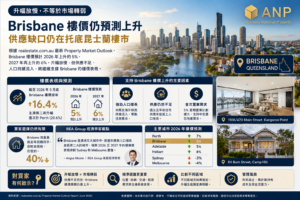
According to data, as of the second quarter of 2025, Brisbane's overall residential vacancy rate is about 1.0 %, which is the same as the same period last year, but far below the average level of the decade before the epidemic. 3.3 %The Real Estate Institute of Queensland (REIQ) further states that across the state’s 50 local government areas, 38 areas with vacancy rates no higher than 1.0 %, of which Brisbane city and its outer suburbs have been maintained for a long time 0.9 % or less.
The industry described this as "the most intense rental shortage on record" - a large number of tenants flocked to the viewing days, and some properties were pre-let before they were even put on the market.
For tenants, the competition is fierce; but for investors, it means extremely high stable returns and room for rental negotiation.
Suburban growth drives rents to new highs
The latest Brisbane Residential Market Report indicates that Brisbane's overall residential rents are expected to continue to grow strongly through to 2025:Houses have an annual increase of about 5.1 %;
The apartment market performed particularly well, with data showing that the median rent for units increased by more than 11 %, mainly driven by factors such as the return of immigrants, the recovery of international students and the postponement of first-time home buyers into the market.
Meanwhile, the supply of properties continues to decline: by mid-year, there were fewer rental properties listed in Brisbane than last year. About 12 %, the number of units has fallen further 20 % or more.
Industry insiders point out that this structural shortage is not a short-term phenomenon. Due to high construction costs, delays in land approvals, and a decline in developers' willingness to launch projects, the supply gap is likely to continue until 2026.
Strong districts lead the way: Inner and middle ring suburbs see the strongest rental growth
In terms of house price and rent increases,Brisbane suburbs performing significantly ahead of the national average.
According to the data:
- Macgregor (South): Single-family homes have increased by about 33 %, the price of apartments has increased by as much as 45 %.
- Greenslopes, Tarragindi, Gordon Park In the Central District, the annual rent has increased by about 20–30 %.
- Virginia (Northern): House values rose by 38.7 %, ranking among the best in Queensland.
- Woodridge (Logan District): Apartment market rises year on year 41 %, reflecting the rapid increase in rental demand in outer areas.
These areas share common characteristics: convenient commuting to the city center, high-quality schools, well-developed infrastructure, and limited supply. They demonstrate exceptional resilience in both long-term rental opportunities and capital appreciation potential.
Three drivers of demand: population inflow, rental returns, and Olympic infrastructure
- Population influx continuesBrisbane has become a top choice for southern state residents and international migrants. Its low cost of living, pleasant climate, and comprehensive education and healthcare facilities are driving growing demand for suburban housing.
- High rental returns: As vacancy rates continue to be low, landlords are able to maintain stable occupancy rates, the average rental return rate has increased significantly, and investment returns have outperformed Sydney and Melbourne.
- 2032 Olympics to boost infrastructure developmentTransportation and urban infrastructure upgrades are spurring Chinese and foreign investors into the market. Some middle-ring suburbs, such as Dutton Park and Woolloongabba, benefit from Olympic planning and improved transportation, and are considered the next wave of potential hotspots.
Risks and Strategies: Accurate Market Entry in a Resilient Market
Experts warn that despite the resilience of the Brisbane suburban market, investors still need to pay attention to the following three points:
- Interest rates remain highWhile the market anticipates potential interest rate cuts in 2026, current borrowing costs remain high. Investors are advised to adopt a medium- to long-term holding strategy, balancing expenses with rental cash flow.
- Supply shortages drive price volatility: With extremely low supply, any new development projects may have a short-term impact on rental trends in the area.
- constituency key: Locations with good school districts, railways and infrastructure still have relative advantages, and investors should choose carefully.
Overall, Brisbane's suburbs have become one of the most resilient real estate markets in Australia thanks to their stable rental returns, continued population influx and limited supply.
Conclusion: A tight market is an opportunity. ANP helps you make precise plans.
In this market environment where the vacancy rate has fallen below 1 % and rental housing is almost "hard to find", the window of opportunity is closing rapidly.
Based in Brisbane and Hong Kong, ANP (Australia National Property) boasts a diverse team of professionals, including urban and rural planners, real estate professionals, legal and banking professionals, immigration consultants, and market research analysts. We can identify high-potential sites in Brisbane's suburbs and provide a comprehensive solution from site selection, due diligence, development planning, to post-sale management.


 Chinese