
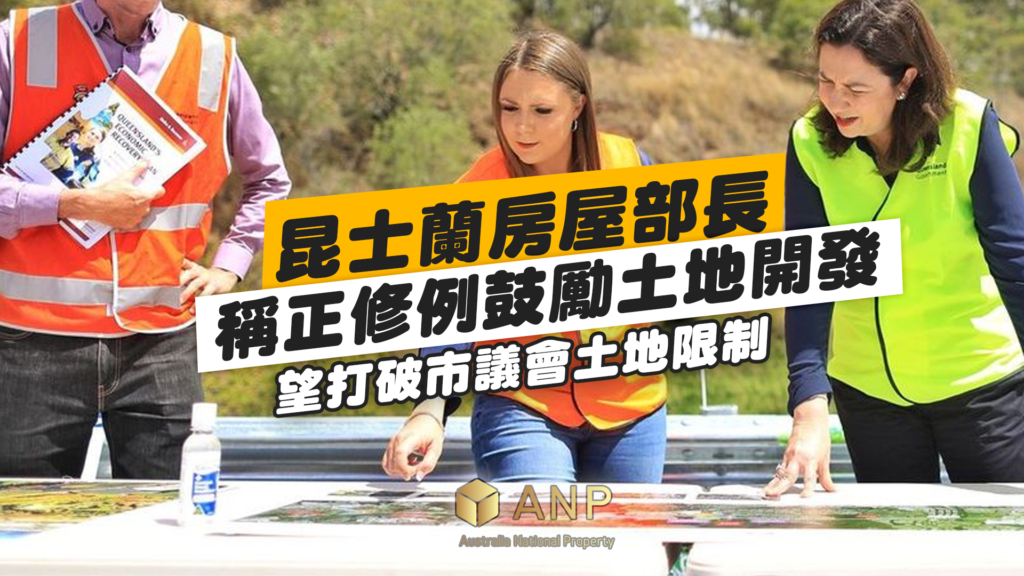
Queensland's new Housing Minister, Meaghan Scanlon, just 31, has revealed her willingness to increase land development in Queensland to address its housing crisis, even at the cost of setting mandatory targets. In an interview today (the 26th), she described herself as a "Yimby" ("Yes in My Backyard") advocate, pledging her unwavering support for housing development. She stated that in the face of the dire housing crisis, the state government will implement more proactive planning reforms, including paying developers' council fees, purchasing former hotels to create affordable housing, and relaxing planning restrictions in exchange for more affordable housing.
Contents Overview
ToggleEncouraging land development in Queensland to address housing crisis
In a recent interview, Minister Scanlon said: "I am pro-housing and I am not shy about it. We want to open the doors for business. We want to try and unlock as much supply as possible." She pushed for a series of major reforms early in her term, including setting mandatory housing targets for city councils, establishing a A$350 million fund to promote infill development, and introducing new regulations to streamline the development approval process.
Minister Scanlan stressed that to address this issue, it is necessary not only to increase housing supply but also to promote housing diversity and sustainability. She advocated for the promotion of medium-density residential development in city centers and areas with convenient transportation, which would not only help reduce dependence on cars, but also improve the quality of life while having a lower impact on the environment.
Conflict with city government policies
However, the state government's "Housing for Queenslanders" plan runs counter to the Brisbane City Council's policies. Minister Scanlon wants to increase housing density and reduce reliance on cars. Instead, in 2020, the Brisbane City Council passed a ban on townhouses on 63% of urban residential land and increased parking, a move that veers sharply away from the state government's push for public transport-based development.
Minister Scanlon said if the council's planning amendments did not meet the state government's objectives, the state government would intervene and push for the necessary planning law reforms to achieve more efficient and sustainable housing development.
To drive this policy shift, Minister Scanlon has set a series of targets and requirements for Brisbane City to approve 210,800 new dwellings over the next 15 years. She hopes this "mandatory housing target" will force local governments to rethink their planning strategies to meet the growing demand for housing.
Minister Scanlon said she hopes to lay the foundation for future development and create a more inclusive, diverse and sustainable housing environment. As Queensland continues to attract people from both domestic and international sources, Minister Scanlon and her team face significant challenges, but she is optimistic that these goals can be achieved and firmly believes that through proactive policies and reforms, a better future can be created for Queenslanders.




 Chinese