

When it comes to the Australian property market, many Hong Kong and Taiwanese buyers often immediately think about whether Brisbane is worth buying, whether Sydney is too expensive, or which type of property is easier to rent out. However, for overseas buyers, the first step is usually not choosing a location, but figuring out whether they can actually buy that type of property.
This is often more crucial than market fluctuations. Because if you buy the wrong product or misunderstand the rules from the start, you may have to start all over again, whether it's the application, signing, financial arrangements, or even the entire investment strategy.
Australia has always had an overseas investment approval system. For residential properties, foreigners generally need to obtain approval first, and government policy has consistently favored channeling overseas funds into projects that increase housing supply, such as new homes, rather than competing with local buyers for existing resale properties. The Australian Taxation Office and its foreign investment approval framework have also reiterated in recent years that, generally regardless of the value of residential land, foreign investors usually need to complete the relevant applications first.
In the simplest terms, the residential properties that overseas buyers commonly encounter and have the most opportunities to access mainly include brand-new homes, off-the-plan apartments, newly built townhouses, and house and land packages. These properties are more common not because the market particularly favors overseas buyers, but because Australia's foreign investment policies tend to favor overseas capital flowing into residential categories that can increase supply. The Australian Taxation Office (ATO) currently lists "new dwellings" and vacant land suitable for residential development as key areas for foreign buyers to consider.
Conversely, many people previously believed that having a temporary visa allowed them more flexibility in considering secondhand homes. However, from April 1, 2025 to March 31, 2027, Australia imposed a stricter temporary ban on foreign persons purchasing established dwellings. Official statements are now clear: during this period, foreigners, including temporary residents and foreign companies, are generally prohibited from purchasing secondhand homes, with only very limited exceptions. This is also where many overseas buyers have most easily made mistakes in recent years by relying on outdated information.
Therefore, if you still hold the mindset of "buy an old house to rent out first, and then think about other things later," you may have already gone down the wrong path from the start. This is especially true for buyers from Hong Kong or Taiwan who are new to the Australian property market. If they do not understand the product restrictions first and only focus on comparing rental returns, school districts, or appreciation potential, they may not actually be qualified to buy the type of property they are researching.
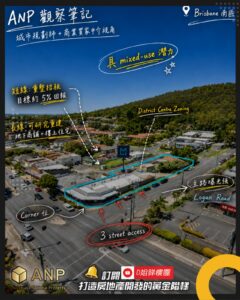
Another point worth noting is that many people equate "residential investment" with "buying property in Australia," but for some overseas investors, commercial properties are actually more worthy of careful consideration. The reason is simple: residential properties face more restrictions, while the framework for commercial properties is not entirely the same. Official guidelines indicate that whether foreigners need approval to acquire commercial land usually depends on the land type and the monetary threshold; the threshold for vacant commercial land is $0, while developed commercial land typically has a higher threshold. In other words, not all commercial properties are subject to the same primary obstacle as residential properties—whether or not they can be bought is the main hurdle. It actually depends on the nature of the property, the transaction structure, and the amount involved.
Of course, this doesn't mean commercial properties are necessarily easier to acquire, nor does it mean they are less risky. The lease structures, vacancy risks, usage restrictions, tenant strength, return models, and financing conditions involved in commercial properties are quite different from those of residential properties. However, from a "regulatory framework" perspective, for some overseas investors with sufficient funds who are not in a hurry to buy a primary residence, commercial properties are indeed a path worth exploring.
Another question many people will ask is: If I don't buy an existing house, but want to build my own, how much money do I need to prepare upfront?
The most common misconception about this issue is that as long as there is land cost plus construction cost, it roughly equals the cost of the entire project. In reality, the most common problem with self-built projects is never that a single cost is too high, but rather that there are too many small but crucial costs in the early stages that are underestimated or even completely overlooked.
The first and often unavoidable expense is the approval and compliance costs. Foreigners purchasing residential land typically need to complete an international investment application first, and vacant land usually comes with development conditions, such as the requirement to complete construction within a specified period. The ATO's purchase process page clearly states that foreigners can buy vacant land, but generally must build residential buildings on the land within four years.
Secondly, there are taxes and holding costs. In Queensland, for example, in addition to the standard transfer duty, residential transactions by foreign buyers may involve an additional 8% Additional Foreign Acquirer Duty; if the holding structure belongs to specific foreign entities, they may also face a land tax foreign surcharge later. For many, the problem isn't a lack of awareness about Australia's stamp duty, but rather a failure to factor in the "additional taxes for overseas buyers" into their cash flow budget.
Thirdly, there's the design and technical pre-construction phase. Even for a seemingly ordinary house and land or self-built project, the pre-construction phase may still involve surveying, site investigation, soil testing, engineering design, drainage and foundation assessment, planning consultant opinions, and legal reviews. If the terrain is complex, sloping, or affected by flooding or bushfire overlay, costs and approval difficulties can increase significantly. These costs may not be as noticeable as the construction contract price, but they are often where the budget is most likely to get out of control.
Fourthly, there's the time cost. Many buyers only calculate "how much construction will cost," without considering the pressure of waiting for design approvals, loan approvals, site handover, material supply, extended construction periods, and interest and other expenses during the holding period. For owner-occupiers, this translates to cash flow pressure; for investors, it dilutes the overall return. A six-month delay can drastically alter the overall picture.
Fifth, there's the difficulty of exiting the project. Building your own property may seem proactive, but the earlier the project begins, the more variables there are. Land conditions, building restrictions, service connections, builder quotes, valuations, and even the resale market may all differ from initial expectations. Some land may seem flat, but it might not be easy to develop; some products may seem "buildable," but there are many hurdles before construction can actually begin.
So if you ask me what the first lesson is for overseas buyers buying property in Australia, I would say it's not about which city is the best, but about clarifying three things: First, whether you are eligible for foreign investment approval; second, whether the type of property you are interested in is eligible to buy; and third, if you intend to go from buying land to building a house, whether you have truly reserved enough funds to cover all the unseen upfront costs.
While much of the market's content remains focused on "which area is the best to buy in," truly sophisticated investors should first inquire about the regulations, then the products, and only lastly about appreciation. For overseas buyers, the rules are not just incidental information, but the starting point for the entire investment decision.
If you are a buyer from Hong Kong or Taiwan and are considering investing in residential, house and land, or even commercial properties in Australia, the safest approach is always to first clearly define the range of viable products based on your immigration status, visa, source of funds, holding method, and investment objectives before proceeding. Doing so is often more important than entering the market a month earlier.
This article is for general informational purposes only and does not constitute legal, tax, or investment advice; individual cases require consultation with professionals based on specific circumstances.

 Chinese