

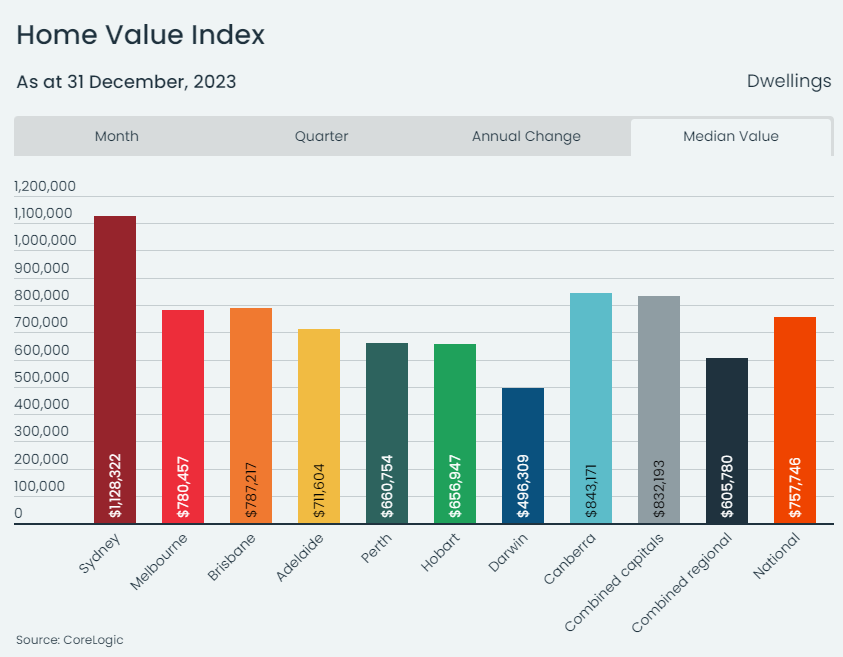
In 2023, Brisbane's property market assumed even greater prominence within Australia, with the annual median house price surpassing Melbourne's to reach A$787,000, A$7,000 higher than Melbourne's. This marked a significant turning point since 2010. Despite five interest rate hikes in 23 years, Brisbane's property market has rebounded, maintaining a steady upward trend.
State Comparative Analysis
The Queensland capital's property market showed a strong recovery trend in 2023, with residential property prices increasing by 13.11% per 3T over the year, ranking second nationwide, behind Perth's 15.21% per 3T. In contrast, property prices in several other capital cities remained below their previous highs, including Sydney (down 2.11% per 3T), Melbourne (down 4.11% per 3T), Hobart (down 11.21% per 3T), Darwin (down 7.21% per 3T) and Canberra (down 6.31% per 3T).
According to CoreLogic data, the performance of the housing market in each state in 2023 will differ significantly, closely linked to affordability and housing supply. Housing affordability is more advantageous in cities like Brisbane and Perth than in cities like Sydney. Data shows that areas experiencing rising property prices have significantly fewer listings, reflecting a supply-demand imbalance. Cities experiencing lower or declining growth have higher listings, indicating a more dispersed market demand.
Brisbane Property Market Outlook
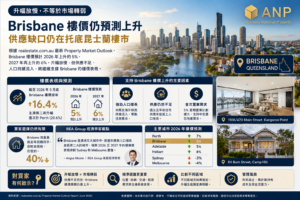
In December, Brisbane house prices grew by 1%, the first slowdown in the past four months. For the whole year, Brisbane house prices rose by a significant 13.3%, with the current median value at A$875,991, an increase of A$5,465 from the previous month and A$102,821 from a year ago.
Brisbane's property market has continued to heat up over the past year. New listings and total listings decreased by 9.81 and 18.31 t/3t, respectively, reflecting a decrease in supply. Meanwhile, the average number of days on the market remained low, indicating strong demand for new listings. PropTrack data shows that Brisbane's residential market is experiencing high interest, with an increase in the average number of inquiries for each listing.
In terms of rentals, Brisbane saw rental growth rates exceeding the national average for both houses and units. House rents increased by 6.71t/3T over the year, with gross yields remaining unchanged at 3.71t/3T from November to December. Unit rents saw an annual increase of 131t/3T, while gross rental yields remained unchanged at 5.21t/3T. While the vacancy rate increased slightly from 0.91t/3T in October to 11t/3T in November, rental properties remain very limited across the city. This suggests that the city's rental market remains tight. Given the persistently low vacancy rate and limited rental supply, Brisbane rents are expected to face upward pressure through 2024.
Economic factors and future prospects
The future of Brisbane's property market is also influenced by economic factors. The likelihood of further interest rate hikes in 2024 appears increasingly remote, which will have a positive impact on the property market. Furthermore, Brisbane's strong job market, coupled with the upcoming 2032 Olympic Games, provides stable support for the city's long-term property market growth. Experts expect that, given tight supply and low listings, Brisbane property prices will continue to rise, but this growth may not be seen across the entire Greater Brisbane region, and location will be crucial.



 Chinese