

As one of Australia's strongest capital city property markets, Brisbane is expected to remain robust throughout 2024, with continued growth in home values, a widely anticipated outcome. However, since the COVID-19 outbreak, Brisbane property prices have already increased by 64%, reaching a record high. Is there still room for price growth? Oxford Economics estimates suggest Brisbane property prices still have considerable potential for growth, potentially reaching 19% over the next three years.
Let’s first take a look at the latest Brisbane property market data (October 1, 2024, data source: CoreLogic)
| Property Type | median price | Monthly changes | Quarterly changes | Annual changes |
|---|---|---|---|---|
| All capital city homes | $881,091 | 0.9% | 2.7% | 14.5% |
| Capital city detached houses | $973,534 | 0.8% | 2.4% | 13.5% |
| Capital city unit | $661,925 | 1.2% | 4.2% | 19.4% |
| Regional Housing | $664,174 | 0.9% | 2.6% | 12.2% |

Despite more properties coming onto the market and rising prices making property less affordable, the Brisbane property market is expected to remain strong for the remainder of 2024 and into 2025. With the supply of new homes being held back by a slowdown in construction, demand is becoming more concentrated on existing properties, driving up prices.
Metropole Brisbane data shows that strategic investors and owner-occupiers have begun actively looking for opportunities to upgrade and pick the best properties in the market. Lower-priced properties have recorded stronger price growth, with the bottom quartile of Brisbane properties now priced 30% higher than they were in 2022.
With expectations of falling interest rates over the next year or two, buyer confidence is expected to improve further, leading to more buyers returning to the Brisbane property market. However, affordability remains an issue for many potential buyers. Buyers should only pay what they can afford, so it's recommended to invest only in areas experiencing faster-than-average wage growth, particularly in urbanising inner and middle ring areas, which are expected to outperform more affordable outer suburbs.
Brisbane's potential property types in 2025
Brisbane’s property market is gearing up for 2025, with plenty of opportunities for savvy investors. With infrastructure projects accelerating, demand driven by interstate migration, and lifestyle shifts, buyers are targeting housing types and areas with growth potential.
Detached houses in growth areas
Houses in Brisbane’s lifestyle and growth neighbourhoods will continue to be the city’s top performers. Demand for homes in Brisbane’s established neighbourhoods will remain strong as more families and professionals from southern states seek more space, affordability and a better lifestyle.
These properties offer both capital growth potential and stable rental income. Investors are advised to purchase three- or four-bedroom houses with land, located close to schools, parks, shopping centers, and transport links. Properties with renovation potential or additional land for future development are even more valuable, allowing investors to generate both capital growth and rental growth.

Townhouses in the city centre and central ring
Demand for townhouses in Brisbane continues to grow, particularly among buyers seeking medium-density living. Townhouses offer the perfect balance between apartments and houses, offering more space at a lower price point.
As infrastructure upgrades and urban renewal projects progress in the city, townhouses in inner-city areas such as Brisbane's South and Greenslopes will become ideal investment options, attracting professionals working in the CBD and nearby hospitals.
Boutique Apartments
While demand for high-rise condominiums is low, smaller boutique condominiums (typically consisting of 4 to 20 units) in well-located areas are expected to perform well in the coming years. These apartments cater to both tenants and homeowners who want the benefits of condo living without the cramped conditions of larger residential complexes.
Two-bedroom apartments are also a good option for investors who can't afford a house or townhouse. Spacious designs, quality finishes, and amenities like balconies, parking, and proximity to cafes, restaurants, and public transportation are all pluses. Trendy riverside areas like New Farm and Teneriffe have always been popular with young professionals and retirees seeking a lifestyle.
The rental market remains extremely tight
Brisbane's rental market is expected to see rising rents and near-record low vacancy rates again in early 2024. According to a report by Dr. Andrew Wilson, the vacancy rate for houses in Brisbane is 0.91 per 3T, while rents have increased by 9.31 per 3T over the past year. The vacancy rate for apartments is 1.01 per 3T, while rents have increased by 24.81 per 3T over the same period.
Brisbane has attracted significant investment, but a surge in immigration has led to greater demand for rentals, and low vacancy rates are keeping pressure on the market. While the vacancy rate is good news for landlords, it is also exacerbating the plight of renters, particularly those looking for affordable housing.


Key Brisbane property market figures for 2025
Brisbane’s extensive infrastructure projects, including Cross River Rail, Brisbane Metro and preparations for the 2032 Olympics, are transforming the city. Areas benefiting from these developments are expected to see increased demand and continued capital growth.
Meanwhile, Brisbane is attracting residents from Sydney and Melbourne due to its lower housing prices, lifestyle advantages and employment opportunities. This trend is leading to increased demand for family-friendly and lifestyle-focused communities.
Brisbane's fundamentals are very strong
It's not just population growth and immigration growth that's supporting Queensland's economy; Brisbane's other fundamental economic conditions are also very solid. In January 2023, Queensland became the nation's best performing state economy for the first time. This historic achievement is driven by strong population growth, a solid jobs market, and overseas demand for energy resources such as coal and gas.
It's worth noting that Queensland's low labor force participation rate and high underemployment rate contrast starkly with its stable economic performance. However, it was this employment growth that fueled the historic influx of migrants, as most people wouldn't make a life change without job prospects. This was also something Queensland lacked in the first half of the decade.

Brisbane property values remain lower than other major cities
Brisbane's housing prices remain relatively low compared to other major cities, a key factor in attracting immigrants. According to the latest data, the median house price in Australia's capital cities is $757,746, while Brisbane's house price is slightly higher at $787,217, but this is still far lower than Sydney's $1.12 million and only slightly higher than Melbourne's $780,457.
Even before the property boom, Brisbane's housing market was relatively affordable, which remained a drawcard for buyers looking to buy amidst a surge in interest rates.
Brisbane's upcoming 2032 Olympic Games will further increase pressure on the city. With the upgrade of infrastructure and transportation, Brisbane's property market is expected to usher in a new round of growth.
The impact of infrastructure on real estate
Investment in infrastructure is one of the most powerful forces in residential real estate because it can transform local economies and drive real estate booms. Large infrastructure projects not only improve accessibility and amenities in an area but also generate economic activity and jobs during construction.
Property Market Outlook 2025
Given the diverse market segments within Brisbane, houses within 5-7 kilometres of the city centre, or within good school zones, are expected to continue to grow strongly.
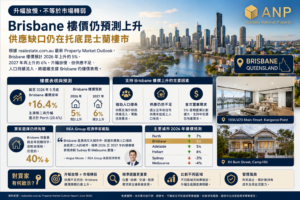
According to ANZ Bank's latest forecast, Brisbane's property market will remain strong over the next two years. According to Oxford Economics' forecast, Brisbane's house prices will continue to grow over the next three years, with the median house price in Brisbane expected to reach $1.21 million per $ and the median unit price to reach $0.71 million per $ by mid-2027.
| City | Median house price | Median price per unit | Growth in total value of single-family homes | Total unit value growth |
|---|---|---|---|---|
| Brisbane | $1.21 million | $0.71 million | 19% | 23% |
| Comprehensive capital city | $1.34 million | $0.87 million | 20% | 21% |
| (Source: Oxford Economics, PriceFinder) |
Population Growth and Property Values
Queensland's robust property market is partly due to strong internal migration during the pandemic, particularly from Victoria and New South Wales, who have moved north to the Sunshine State in search of more affordable lifestyle communities. Popular areas such as Brisbane and the Gold and Sunshine Coasts have further attracted buyers and renters due to increased remote working options.
According to the Australian Bureau of Statistics (ABS), Queensland's net interstate migration has contributed the most, becoming the main driver of the state's population growth. In the future, Queensland's population is expected to continue to grow, and by the time of the 2032 Olympics, Queensland's population is expected to exceed 8.27 million.
| Property | Median price | Δ MoM | Δ QoQ | Δ Annual |
|---|---|---|---|---|
| All Capital city dwellings | $881,091 | 0.9% | 2.7% | 14.5% |
| Capital city houses | $973,534 | 0.8% | 2.4% | 13.5% |
| Capital city units | $661,925 | 1.2% | 4.2% | 19.4% |
| Regional dwellings | $664,174 | 0.9% | 2.6% | 12.2% |
Source: CoreLogic, 1st October 2024



 Chinese