

The uncertain economic outlook in the United States, coupled with the Trump administration's renewed use of tariffs, has led many overseas media outlets to question Australia's economic outlook. However, according to analysis by AMP chief economist Shane Oliver,The chances of a full-blown recession in Australia anytime soon are extremely low.On the contrary, the chances of a full-scale recession in Australia are extremely low. Instead, the country is entering a new economic normal of "slow but steady growth" – a good opportunity to enter the market for medium- to long-term asset allocation.
Contents Overview
Toggle"Per capita recession" does not mean economic crisis
Many people think that "two consecutive quarters of GDP contraction" means a recession, but in fact, the Reserve Bank of Australia (RBA) and the Treasury use a broader standard, includingWill employment, income, and household spending continue to weaken?Therefore, as long as unemployment remains low and consumption remains stable, even a slight decline in GDP may not constitute a true economic crisis.
The commonly held market definition of "two consecutive quarters of GDP decline" as a recession is too narrow. The definition used by the Reserve Bank of Australia (RBA) and the Treasury focuses more on a combination of indicators such as employment, income, and consumption. The unemployment rate remains low at 4.11%, job vacancies are ample, and household spending has not weakened significantly. Even a slowdown in per capita GDP is part of a healthy adjustment.
Seven reasons why Australia is "retreating"
Oliver puts forward the following seven points to illustrate the key to Australia's ability to stabilize its fundamentals:
1. The economy is resilient and has weathered many storms.
Since 1980, except for the special epidemic impact caused by the lockdown in 2020, Australia has successfully avoided global crises such as the Tech Wreck and the Global Financial Crisis (GFC).
2. The global economy is only slowing down, not causing a domino effect
Although the United States has fallen into a high-risk zone (about 45% opportunities), the overall global economy is still mainly slowing down rather than contracting, and the secondary impact on Australian exports is only about 0.5% GDP.
3. Exports to the US account for a very low proportion, so the impact of the trade war is limited
Even if the US imposes a 10% tariff on Australian goods, the actual impact on GDP would only be 0.1%, as exports to the US only account for 5% of Australia's total exports. Major exports such as beef and gold could also be diverted to other markets.
4. A weaker Australian dollar provides a buffer
Since its 2024 high, the Australian dollar has fallen by over 141tbp against the US dollar, making Australian exports more competitive and offsetting the negative impact of falling commodity prices. During the GFC, the Australian dollar fell by 391tbp, which also successfully cushioned the economy.
5. Interest rates still have room to fall
The current RBA cash rate is 4.1%, significantly higher than the pre-pandemic rate of 0.75%. If the economy needs stimulus, there is still ample policy space to cut interest rates.
6. Fiscal policy moves towards easing
As the federal election approaches, both parties are promising subsidies and tax incentives. While not optimal structural reforms, they could provide additional fiscal stimulus and maintain stable domestic demand.
7. Trump's policies are showing signs of fatigue and may shift.
Over the past week, Trump has responded to market turmoil by blinking, suggesting a possible easing of the tariff war. Trump's recent statements suggest a shift in his tariff policy, and market expectations for China-Australia trade are gradually stabilizing.
Other favorable factors further stabilize the property market
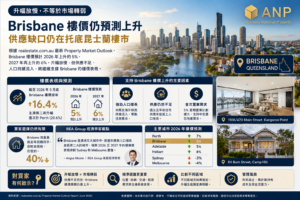
- Immigration continues to increase:Population growth has driven up housing demand, especially in secondary cities such as Brisbane and Perth.
- Labor market remains strong:The unemployment rate remained at 4.1%, and the high number of job vacancies kept household spending resilient.
- Inflation is clearly declining:Core inflation is steadily declining, opening up space for interest rate cuts and benefiting real estate lending activities.
- Government infrastructure spending remains stable: Energy subsidies and infrastructure investment continue to support domestic demand.
Still provides structural support for the real estate market
Despite the uncertain global economy, the Australian property market is still supported by multiple positive factors:
- Accelerating population growth:The number of net immigrants continues to rise, providing substantial support for housing demand, especially in Brisbane and Perth.
- Solid labor market: Job vacancies remain high, maintaining household purchasing power.
- The downward trend of inflation is clear: Core inflation is gradually declining, creating room for interest rate adjustments.
- Government infrastructure spending remains unchanged:Road, rail and renewable energy projects continue to advance, helping to stabilize the regional economy and real estate demand.
Investor strategy: Enter the market against the trend and prioritize mid-priced assets
In the face of market noise, truly visionary investors should focus onStructural advantagesandRegional potentialShane Oliver noted:
"Investing isn't about waiting for calm, but knowing how to position yourself in the eye of the storm. Real estate is about timing, not perfect market moments."
Now is the window to enter the market - especiallyMid-priced properties with stable rents and redevelopment potential in southern Brisbane, inner north Perth, and eastern suburbs of Adelaide, in the macro environment of falling interest rates and returning immigrants, it has excellent capital appreciation potential.
Conclusion: The ANP team helps you develop countercyclical investment strategies
When facing an uncertain market, choosing a partner with professional real estate and economic analysis capabilities can help you gain a foothold and create returns.
The ANP team is dedicated to assisting professional investors:
- Insights into macro trends and regional advantages
- Evaluating stress-resistant asset portfolios
- Design flexible entry and exit strategies
- Site survey and reconstruction potential analysis
If you would like to learn about the latest regional market trends or deploy mid-priced assets, please feel free to contact us.



 Chinese