
Australian Property Development Land Acquisition Guide: How to Find Profitable Land
Contents Overview
ToggleIn the Australian property development market, many believe the most challenging aspects are permits, financing, or construction management; however, for truly experienced investors, the most crucial battle often begins before the project even starts – that is...Seeking land.
The reason is simple: whether a development project can ultimately generate ideal returns is often largely determined before the land is even purchased. If the land itself lacks planning advantages, even if the subsequent design, engineering, and sales are handled well, the profit margin may still be quite limited. Conversely, if land with development potential, whose asking price has not yet fully reflected its value, and whose competition is not too fierce can be secured early on, the initiative and return flexibility of the entire project will often be significantly improved.
The problem is that truly profitable land doesn't usually remain on the open market for long. This is why many developers and seasoned investors pay close attention to it. Off-market opportunities, agent networksand to zoning and density The ability to interpret information. The so-called "land search" is never just about looking at listings online, but about seeing the potential uses and development space of a piece of land before the market has fully reflected its value.
This article will take a practical approach to break down how to find and analyze land in Australian property development, and how to determine whether a piece of land truly has profit potential.
Why is the ability to find suitable sites so crucial to the success or failure of a project?
In property development, profits typically don't appear at the moment of completion and sale, but rather...Judgment at the time of purchaseAccumulation has already begun. Many investors tend to focus on how much they can sell for in the future, but they overlook the fact that what truly determines returns is often the assessment of risk, planning, and potential at the time of purchase.
Whether a piece of land is worth buying is never just a matter of its size. More importantly, it depends on whether it can create additional value at the planning level, and whether it can improve the overall return through land use adjustment, density increase, subdivision and redevelopment, while also meeting the actual market demand in the area.
In other words, land hunting is essentially about finding the following types of opportunities:
- Development potential that has not yet been fully reflected by the market
- Land undervalued due to zoning or density advantages
- Land whose value can be increased through subdivision, redevelopment, or increasing the number of units.
- Off-market opportunities with less competition and more room for negotiation
- Assets that are not fully understood due to their condition, topography, or current use.
Those who truly understand land acquisition don't simply wait for "bargain" properties to appear on the market; they have the ability to identify value that others haven't yet recognized.
Before searching for land, you need to figure out the development direction.
A common mistake many beginners make is seeing a piece of land first and then trying to figure out "whether it's feasible to develop." A more mature approach is to first establish your development strategy and then work backward from your goals to determine the necessary land conditions.
The reason is straightforward: different development models have different land requirements.
If the project positioning is subdivisionInvestors should typically pay more attention to:
- minimum lot size
- frontage
- Plot shape
- access
- Infrastructure connection conditions
If the goal is townhouse developmentThey would place even greater emphasis on:
- zoning
- density
- Building height restrictions
- Parking space requirements
- The target market's absorption capacity for the product
If adopted land banking The strategy and focus will shift again:
- Regional population growth
- Infrastructure completion timetable
- Policy direction
- Long-term planning framework
- Future zoning adjustment opportunities
Therefore, investors should not consider the land first and then its intended use, but rather have a clear direction before searching for suitable land. Otherwise, even with a large number of available properties, it is easy to focus only on price and size, neglecting whether the land truly suits one's needs.
What is the difference between open market and off-market land?
The most direct way to find land in Australia is, of course, through the public market, such as real estate websites, agency platforms, or auction information. However, for many developers, the more valuable opportunities often don't come from fully public listings, but rather from... off-market.
What is off-market?
The term "off-market" generally refers to land opportunities that have not yet been officially and fully publicly listed, or that are only circulating among agent networks or designated buyer lists. These types of land may not be completely undisclosed, but they have usually not yet entered the stage of full public bidding.
Advantages of off-market
The biggest advantage of off-market is thatCompetition may not have been intensified.Because of the lower market exposure, buyers have the opportunity to conduct zoning research, preliminary feasibility analysis, and price assessments before competition intensifies. For developers, this time lag is itself an advantage.
Some sellers may also prefer to contact buyers with strong execution capabilities first, rather than immediately launching a full public tender, based on privacy, timing, or sales strategy. This also gives prepared investors more room to negotiate terms and make judgments.
Off-market doesn't necessarily mean cheaper.
However, investors should understand that off-market does not inherently mean lower prices. Some agents may use "not publicly available" as a selling point, but the actual asking price may still be quite aggressive. What truly matters is never whether a property is off-market, but rather your ability to accurately assess its true value.
Why is the agent network so important?
In the Australian property development market, many worthwhile plots of land don't necessarily appear on public platforms immediately. Therefore, establishing a stable and effective [system/mechanism] is crucial. agent networkThis is often an important part of the site search process.
The true value of proxy networks
Real estate agents are typically the first to contact homeowners expressing their intention to sell. If investors can cultivate relationships with agents familiar with the local market, they have the opportunity to receive information about suitable land before it becomes widely available. For developers, having early access to information is a competitive advantage in itself.
How to establish an effective agency relationship?
A truly effective agency relationship is not as simple as saying "Notify me when there's a disc available," but rather ensuring that the agent clearly understands your:
- What type of land are you looking for?
- What is the approximate budget range?
- Which suburbs or areas do you prefer?
- Planning to do subdivision, townhouse, or land banking?
- Do they possess the ability to quickly make judgments and close deals?
Agents typically prefer to contact buyers who are clear about their goals, communicate directly, and have strong execution capabilities. Once you establish an image of being "serious, reliable, and decisive" in the market, you will naturally see more listings than the average buyer.
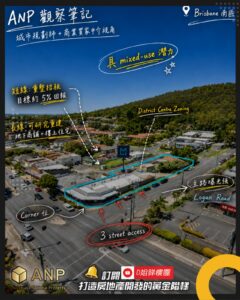
Zoning: The core variable determining land value
For property development, the true value of land often lies not in its current state, but in the planning regulations that allow it to be used.What to makeAnd zoning is precisely at the heart of this problem.
Why is zoning so crucial?
Because zoning directly affects:
- Land use
- Building density
- Building height restrictions
- setback requirements
- Does it allow for multi-family housing or other development models?
In other words, two plots of land of similar size can have vastly different development values if their zoning differs. The valuation logic for a plot of land that only allows for single-family housing is often completely different from that of a plot of land that can be used for multi-dwelling or townhouse development.
What are the key zoning considerations before buying land?
Investors generally need to examine:
- Land use zoning
- Is subdivision allowed?
- Is multi-dwelling or townhouse development permitted?
- Building height restrictions
- minimum lot size
- setback and site coverage
- Character overlay or other planning restrictions
- Flood overlay, environmental limitations and additional conditions
If zoning enters the market without a clear understanding, many risks often only gradually emerge after the transaction is completed.
density: Why is density-based gameplay enough to change the returns?
If zoning determines "whether it can be done", then density affects "to what extent it can be done".
In property development, many people only look at the land area, but overlook a more crucial question: how much saleable or holdable value can this land ultimately provide? And this is closely related to density.
What is density?
Simply put, density can be understood as the number of residential units, building volume, or overall development intensity that a piece of land can accommodate. For developers, the higher the density, the more units can theoretically be built, and the higher the potential value of the land.
However, density-based strategies are never about "the more the better." In practice, other factors must also be considered:
- Parking space arrangement
- Lighting and ventilation
- Privacy and Open Space
- Construction costs
- Local market demand
- Unit selling price and sales rate
The truly mature approach is not to blindly pursue unit quantities, but to find the most profitable balance between planning allowances and market acceptance.
Why are some people always able to see value before the market does?
Because typical homebuyers focus on the existing condition of the property, school district, views, and amenities; but developers often envision a site that will eventually house more than just one house, potentially two lots, several townhouses, or even a higher-density project. This difference in perspective is precisely where many developments profit.
The market sees today, while developers look at tomorrow after the planning is completed. When others are still evaluating land from a self-occupied perspective, if you can already see the potential for revaluation from zoning, density, and product positioning, your investment initiative will naturally be different.
How to determine if a piece of land has profit potential?
Even if a plot of land has potential in terms of zoning and density, it doesn't necessarily mean it's worth buying. Land with real profit potential usually meets the following conditions simultaneously:
I. The feasibility of the plan is clear.
The land must be feasible in terms of zoning, overlay, minimum lot size, access, and infrastructure connectivity. If there are too many planning obstacles, the time and cost risks are often far greater than expected.
II. Prices do not fully reflect development potential.
If the market has already fully recognized the development value of a location, prices are usually already inflated. What truly deserves in-depth research are opportunities where potential exists, but the asking price has not yet fully reflected that potential.
Third, there is actual demand in the local market.
Developable does not equate to worthwhile. Even if zoning permits townhouse construction, if the area lacks sufficient absorption capacity for such properties, the final selling price and sales speed may fall short of expectations. Therefore, planning value must be considered in tandem with market demand.
IV. Costs and timelines remain within a controllable range.
No matter how promising the land is, if the holding costs are too high, the construction period is too long, and the financing pressure is too great, the overall project may still lose its appeal. A truly mature feasibility must take into account both time costs and risk buffers.
The most common mistakes beginners make when searching for land
Common problems for beginners when searching for land include:
- Focusing only on area, ignoring zoning and planning constraints.
- Only looking at the asking price without analyzing the true value brought by the subdivision potential or density.
- Over-reliance on public platforms and neglect of the importance of local agent networks
- Mistaking off-market for necessarily cheaper prices, without returning to the numbers and conditions themselves.
- Overestimating market absorption capacity and underestimating planning, approval, and holding time costs.
Ultimately, the most difficult part of finding land is never whether there are available properties on the market, but whether you have the ability to distinguish which properties are truly worth the time and effort to research.
In conclusion: Real opportunities often arise before the market is fully understood.
In Australian property development, the first battle is never on the construction site, but before acquiring the land. The ability to find a plot of land with planning potential, a reasonable price, manageable risks, and clear market demand often determines the difficulty and potential returns of the entire project.
There are still opportunities in the open market, but to improve the success rate...Off-market resources, agent networks, and a deep understanding of zoning and density.These are all core competencies that cannot be ignored. Those who truly understand land scouting do not simply see more than others, but they see more deeply.
Therefore, before making a formal investment, what investors should cultivate most is not simply land-finding skills, but the ability to judge the planned value of land. When you can see potential from zoning, space from density, and seize opportunities from agent networks, land-finding will transform from a matter of luck into a replicable investment skill.

 Chinese