

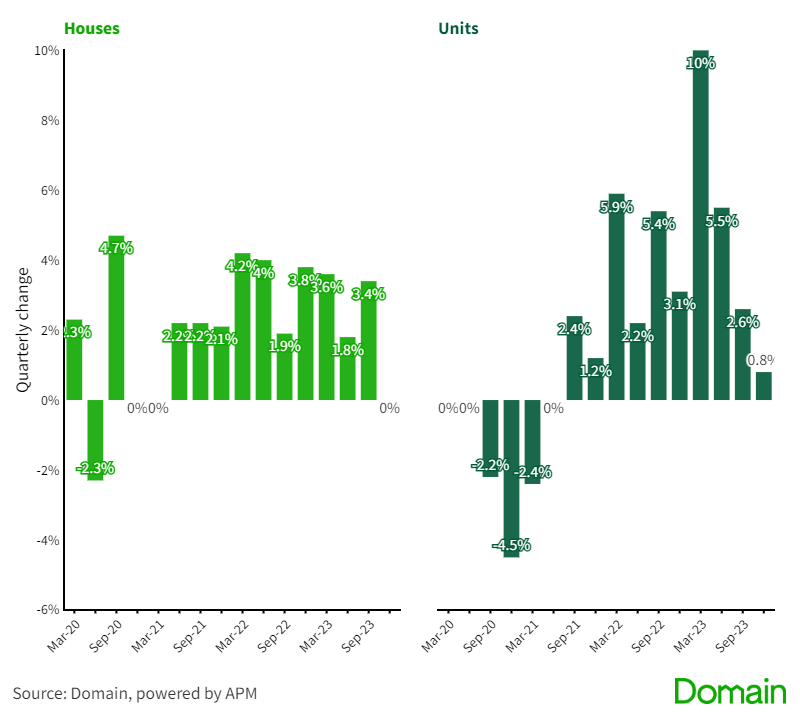
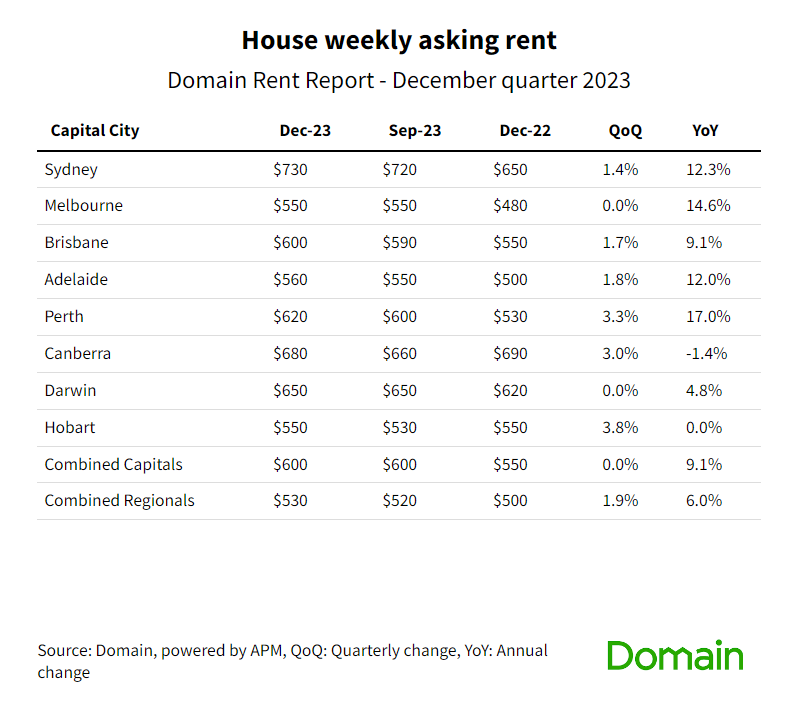
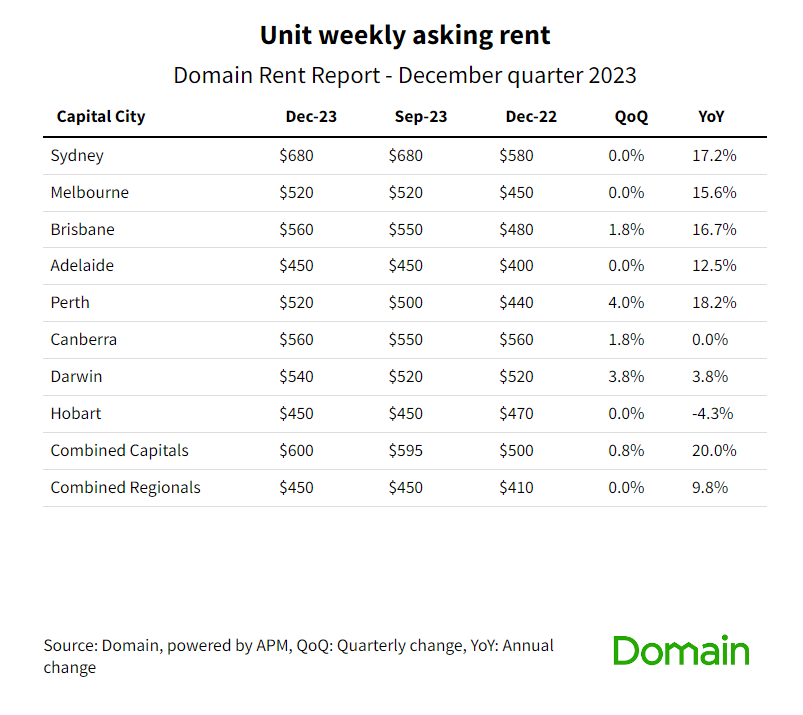
Rents in Australia's major cities slowed in the latest quarter for the first time in three years, potentially good news for tenants looking for a home. However, persistently high demand and low supply in the housing market still pose challenges for those looking to rent. Domain's rental report shows that in the three months to December, median rents in capital cities remained at a record high of $600, up 9.11% year-on-year.
Perth and Brisbane unit rents see strong growth
Domain Group chief research and economist Dr Nicola Powell said the rental market in 2023 would be highly competitive and more favourable for landlords. "This year has been a year of housing crisis, with record-low vacancy rates leading to consecutive (and record) increases in asking rents," she said. However, she also noted that this was the first time in nearly three years that capital city rents remained flat, ending a streak of 10 consecutive quarters of record growth.
But trends varied across the major capitals. "Melbourne and Adelaide saw the highest rent growth ever for houses, and Brisbane and Canberra for units," Nicola said. Sydney was the most expensive city to rent both houses and units, at $730 and $680 per week respectively. Hobart and Melbourne were the cheapest cities to rent houses, at $550 per week, while Adelaide and Hobart tied for the cheapest for units, at $450 per week. Perth led the nation in rent growth, with houses increasing by $171,000 per week to $620 per week and units increasing by $182,000 per week to $520 per week.
The slowdown is expected to continue in 2024
While asking rents are unlikely to drop significantly, Powell expects rent increases to slow in 2024, leading to improved conditions for potential tenants. "It's impossible for rents to continue to rise at the current rate, especially in 2022 and early 2023, which suggests it's not sustainable in the long term," he said.
"However, these conditions remain challenging for tenants and we cannot lose sight of that. Vacancy rates remain low, with the exception of the Australian Capital Territory... but I would expect the pace of rental growth to be much lower than it is in 2022."
Powell said the introduction of homebuyer incentives by several state governments, such as the Help to Buy scheme, which shares benefits with new homeowners, and the Queensland government's doubling of the first-time homebuyer grant, would provide more hope for tenants hoping to buy a home. Powell estimated that an additional 30,000 to 60,000 rental properties would be needed to stabilize the market.
"We've also noticed increased talk about interest rate cuts this year, which would have a significant impact because if we saw a rate cut, it would mean increased borrowing capacity, potentially allowing some tenants to afford mortgages and buy homes sooner," she said.
"There are a lot of changes in the environment going into 2024 that suggest we're moving away from the period of extreme rent increases that we've seen over the past few years... I do think tenants will be finding better deals in 2024."




 Chinese