

As Australia's baby boomers retire, what has been hailed as "the largest generational wealth transfer in history" is unfolding. KPMG estimates that over the next two decades, up to A$3.5 trillion in assets will be passed down from baby boomers to Generation X and millennials. Most of this will be in real estate, which is expected to have a profound impact on Australia's residential and commercial real estate markets and provide a potential entry point for overseas funds, especially high-net-worth investors.
Contents Overview
ToggleThis wealth transfer will not only reshape Australia’s economic structure but also provide unprecedented opportunities for investors. This article will delve into this trend and analyze its impact on the Australian real estate market.
Generational wealth transfer: the new driving force of Australian real estate
A KPMG report published in early 2025 indicates that Australia will experience an unprecedented wave of asset redistribution as its population ages. Baby boomers (born between 1946 and 1964), who generally hold significant real estate and equity assets, are expected to make gifts during their lifetime or upon their death over the next ten to twenty years. The biggest beneficiaries will be their children, Generation X (1965–1980) and some Millennials (1981–1996).
According to the analysis, residential property is the most important type of asset. The heirs will:
- Keep the original property for own use or rent it out, and gradually become the next generation of landlords;
- Renovate and sell them for arbitrage;
- Reinvest inherited assets, such as in urban redevelopment projects or low-density land development.
Although the market continues to be tight in the long term, the "supply release" brought about by housing inheritance will reconfigure some locations and value areas in the next few years.
The rise of Generation X: a key player in asset redistribution
Research shows that Generation X has surpassed Baby Boomers to become Australia's largest property and share asset holders, a change largely attributed to asset transfers from Baby Boomers and asset accumulation by Generation X.
However, the relatively slow rate of asset accumulation among millennials and Generation Z could exacerbate the wealth gap between generations.
New strategies for investors: capitalizing on market changes
Faced with this wealth transfer, investors need to adjust their strategies to cope with market changes.
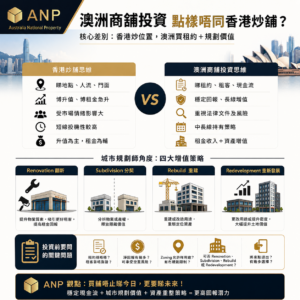
- Renovation and resale: Some heirs may choose to renovate the inherited property and then sell it for capital gains.
- Redevelopment Potential: Inherited older properties may become targets for redevelopment, especially in urban core areas.
- Commercial real estate investment: As competition in the residential market intensifies, commercial real estate is becoming a new favorite among investors.
Opportunities and challenges for investors
For investors, Australia's generational wealth transfer provides an opportunity to diversify investments.
- Market entry points: As large amounts of assets enter the market, price corrections may occur, providing entry points for investors.
- Long-term appreciation potential: The real estate markets in Australia's major cities have long-term appreciation potential and are suitable for investors seeking stable returns.
- Legal and tax considerations: Investors need to understand Australia's legal and tax systems to ensure the legality and efficiency of their investments.
Seize the golden opportunity of generational shift
Australia is in the midst of a profound generational wealth transfer that will not only reshape its economic structure but also present unprecedented opportunities for Hong Kong investors. By gaining a deep understanding of market dynamics and adjusting their investment strategies, Hong Kong investors can expect to reap substantial returns from this transformation.




 Chinese