
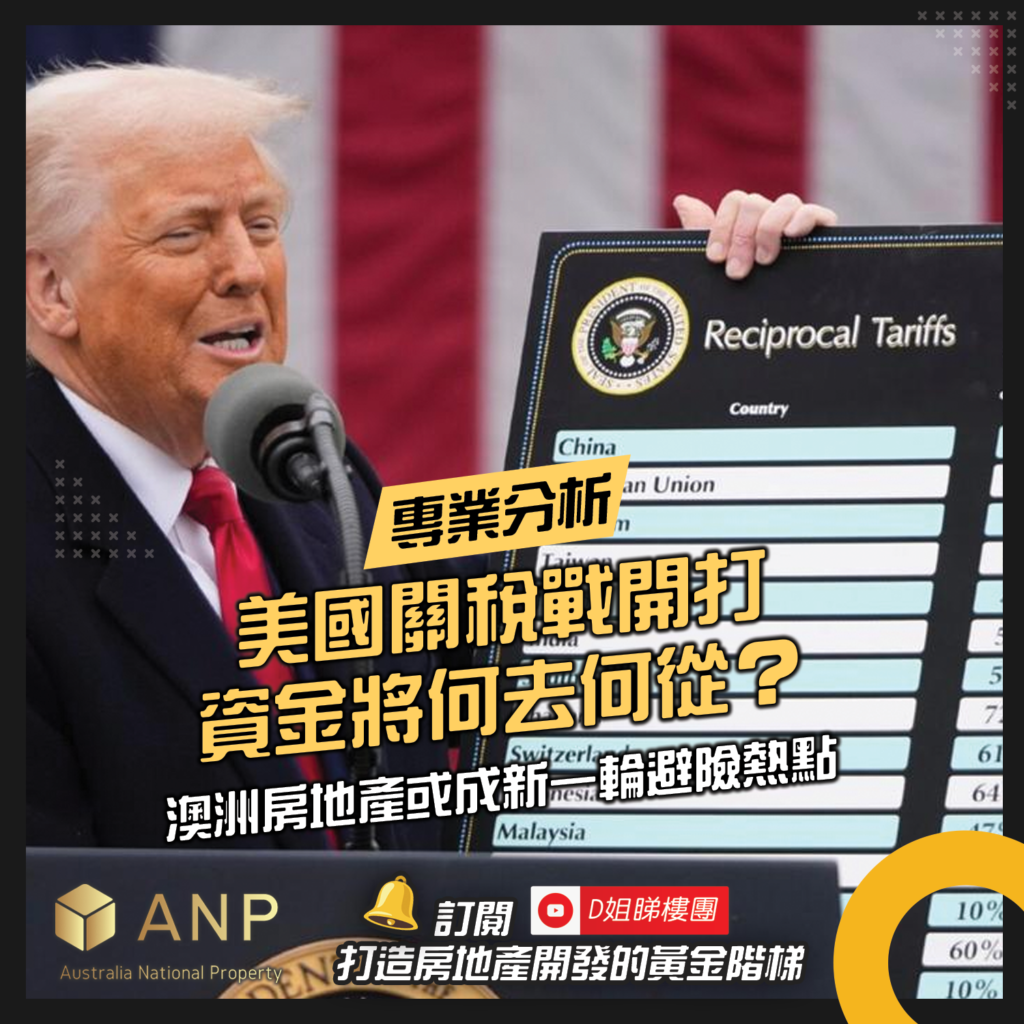
Trump announced the tariff policy on April 3rd, and global stock markets reacted immediately.
On April 3, 2025, former US President Donald Trump announced tariffs on all global imports, starting at 10%. He also imposed "reciprocal tariffs" on specific countries with trade deficits with the US. This move marked the start of a full-scale tariff war and sent shockwaves through global markets.
Contents Overview
ToggleThe stock market reacted immediately and dramatically. The S&P 500 index fell 4.81 points, its largest single-day drop since 2020; the Nasdaq plummeted 61 points. The Dow Jones Industrial Average plummeted 1,679 points, or 41 points. Asian and Australian markets were also affected, with the ASX 200 index falling approximately 1.81 points in early trading, and the Nikkei 225 closing down 2.81 points. Funds poured into the safety of US Treasuries, pushing the 10-year yield down to 3.9681 points, a six-month low.
This sudden financial crisis has once again drawn the market's attention to an old question: where should funds flow when the market is turbulent?
Australia's earthquake-resistant properties are drawing renewed attention
In such an environment of global uncertainty, Australian real estate is once again seen as a safe haven for funds.
First, Australia's political stability and robust legal system have long made it a highly attractive destination for foreign investors. Furthermore, its rental yields are attractive. According to CoreLogic data from March 2025, the national residential rental yield reached 4.26%, higher than most developed economies.
Secondly, the continued weakening of the Australian dollar has given foreign currency holders greater purchasing power. By the end of the first quarter of 2025, the Australian dollar had fallen to 0.635 against the US dollar, a recent low, attracting an influx of capital from Hong Kong dollars, Singapore dollars, and US dollars.
Finally, the Reserve Bank of Australia (RBA) announced in April that it would maintain the cash rate unchanged at 4.1%, but the market generally expects that if the impact of the trade war expands, the RBA will have the opportunity to start cutting interest rates in the second half of the year to further stimulate real estate demand.
Rising construction costs push up house prices
In addition to market and policy factors, the tariff war also has an indirect impact on real estate through import costs.
According to a March 2025 report by the Property Council of Australia, construction costs have risen by approximately 3.41% over the past year. Imported materials like steel, wiring, and glass have seen the most significant increases. These costs are passed on to developers and buyers, driving up the prices of new projects.
For investors, this not only means potential for capital appreciation, but also means that in the context of insufficient supply and rising building material prices, the scarcity and resilience of existing properties and pre-sale projects will be further enhanced.
Tightening Foreign Investment Policies: New Restrictions and New Opportunities
Effective April 1, 2025, the Australian government will implement new foreign real estate restrictions: non-residents will be prohibited from purchasing established, resale residential properties for two years, until March 31, 2027. This policy, confirmed by law firm K&L Gates, has wide-ranging implications.
This means that foreign investment is currently limited to uncompleted, off-the-plan projects, including new apartments and townhouses. This policy has undoubtedly had a diverting effect on the market, increasing demand for developers' pre-sale projects and making high-quality new developments highly sought after.
However, faced with purchase thresholds and tax regulations, some overseas investors have begun looking for more flexible ways to enter the market.
Opportunities and choices amid market turbulence
The new round of tariff war in the United States has ignited anxiety in the global market, but as past experience has shown, capital will always seek ways to achieve stability and value-added.
Australian real estate, whether through direct purchases of off-the-plan projects or indirect investments in real estate investment trusts (REITs), offers a rational and defensive asset allocation option. For investors with more capital, the options are even more diverse.
Currently, there are two main entry strategies for high net worth investors (HNWIs) in the Australian real estate market:
- Entrust a buyer agency service designed specifically for foreigners: These agents are familiar with the home buying process for foreigners and can provide tailored property advice based on asset allocation, tax considerations and long-term needs. They are particularly suitable for investors who want to acquire long-term holding properties.
- Participate in Australian Managed Investment Trust (AMIT)AMIT: This institutional-grade investment structure is suitable for foreign investors, offering high tax transparency, flexible allocations, and the avoidance of double taxation. AMIT typically partners with large fund management companies and covers a wide range of asset types, including residential, commercial, and industrial.
As the world enters an era of greater change and uncertainty, carefully selecting stable assets and combining them with appropriate structures and professional services will be the key to investors' success.
A professional team will help you deploy Australian real estate with confidence
In today's unstable political and economic environment, if you want to establish a stable position in the Australian real estate market, a professional team familiar with local policies, regulations, taxation and practical experience will be an indispensable resource.
ANP Australian real estate expert teamOver the years, we have been deeply involved in core markets such as Brisbane, Gold Coast and Sydney, and are committed to providing overseas buyers, high net worth individuals and investors with:
- Property selection advice and risk assessment: Choose the most suitable off-the-plan or investment property based on market cycles and personal needs
- Tax and legal support explanation: Assist foreigners to understand FIRB, stamp duty, capital gains tax and other systems
- Trust structure and asset allocation consultant:Evaluation and referral of options such as AMIT, REITs, etc.
- One-stop purchasing process support:From budget planning, property comparison, inspection arrangement to handover management
We believe real estate isn't a one-time transaction, but a long-term asset strategy. Whether you're new to the Australian market or looking to further optimize your portfolio, we're happy to provide professional support and long-term assistance.



 Chinese