

As global market volatility intensifies, many overseas investors are reassessing their portfolio allocations between stocks and real estate. Recent data shows that both the Australian stock market and real estate market have experienced significant growth over the past five years, but the underlying return dynamics and risk profiles differ significantly.
The past five years: The stock market rebounded with incredible force
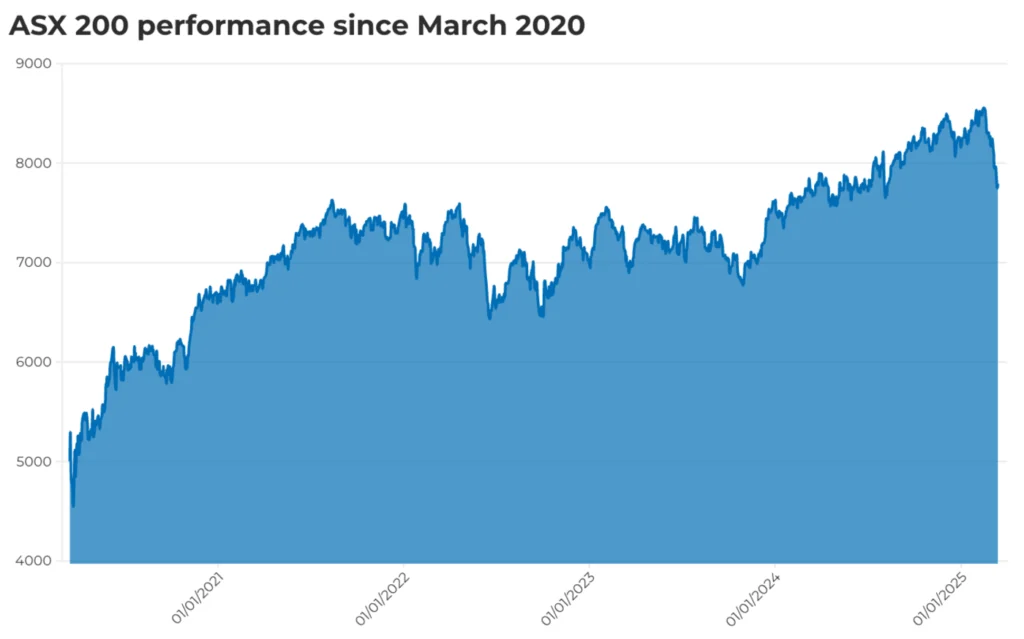
Since the outbreak of the epidemic in 2020, the Australian ASX 200 index has plummeted by about 30% in just one week, but then launched a strong rebound. Calculated from the low point, the increase is as high as 88.2%Even with the correction in early 2025 due to US tariffs and recession risks, the ASX 200 is still up 10% from its 2020 low. 71.4%.
However, to achieve such a return, one must enter the market precisely at the lowest point, which is extremely challenging in practice. If an investor enters the market at a high point in 2020 and holds on to it until now, the return is only 8.6%, far below the overall market average.
The real estate market is steadily rising, with certain regions outperforming the stock market.
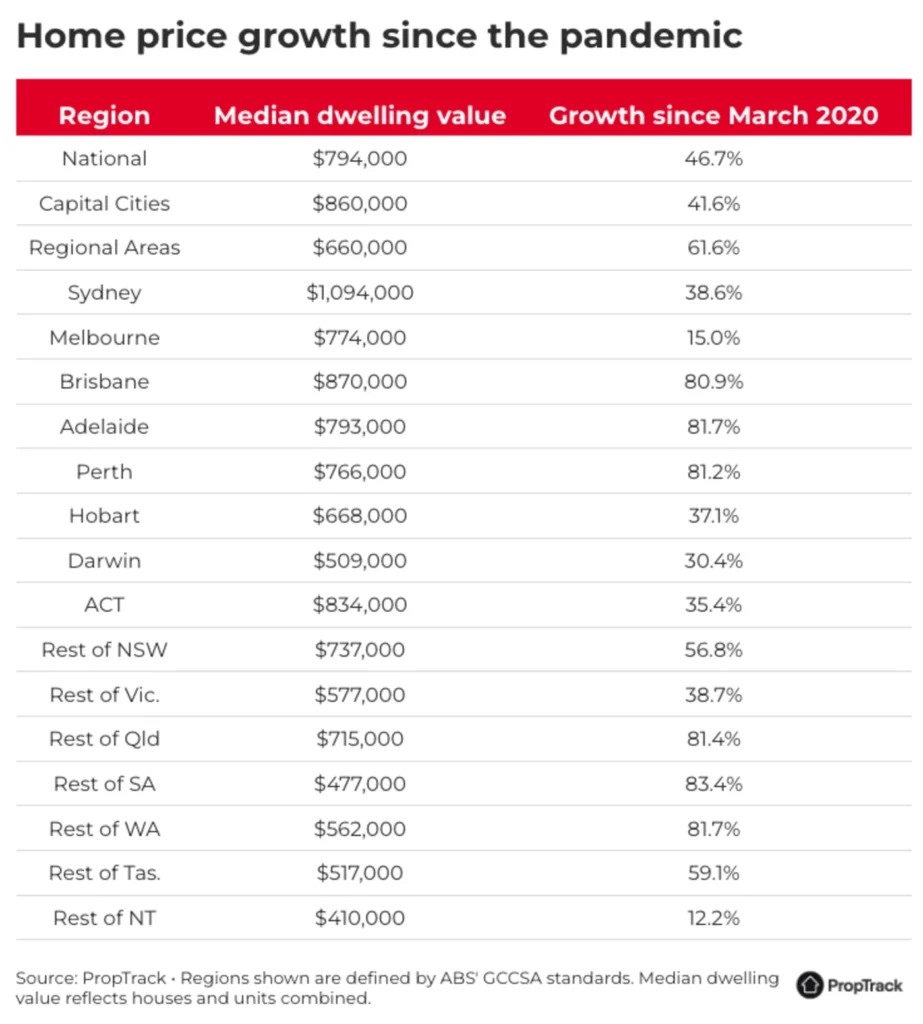
According to the PropTrack index, house prices across Australia have risen since March 2020. 46.7%Among them, Adelaide (81.7%), Perth (81.2%) and Brisbane (80.9%) performed the best, with a similar increase to the overall ASX 200. In contrast, Melbourne performed relatively poorly, with only an increase of 1.3% in the past five years. 15%The reasons include strict lockdown during the epidemic, population outflow and oversupply in the housing market.
Another advantage of real estate is its leverage effect. Most buyers will purchase properties through mortgage loans. For example, if a property worth A$500,000 is purchased with a down payment of 20%, after the property price rises by 46.7%, the capital gain can actually reach AUD 233,500(excluding rental income and expenses), the rate of return is much higher than the original investment.
Rent vs. Dividends: Comparing Cash Flow Sources
In the stock market, the average dividend yield of the ASX 200 is approximately 3.5%, slightly lower than the long-term average (about 4%); and according to the REA report, the rental return rate of residential properties in Australia is about 4.4%Among them, the unit price is as high as 4.9% and the detached house price is about 4%.
Despite this, real estate investors still need to consider various expenses, including property maintenance, property taxes, management fees, vacancy risks, etc. These expenses will directly affect the actual return.
Liquidity and Entry Barriers
One of the biggest advantages of the stock market is its high liquidity – investors can trade online at any time, with a minimum entry point of just a few hundred Australian dollars. In contrast, buying and selling real estate involves time, labor, and transaction costs, resulting in significantly lower liquidity.
Additionally, buying a single property concentrates funds in one asset, resulting in a narrower risk profile compared to the stock market, which can be diversified across multiple industries or sectors.
Tax factors cannot be ignored
Both the stock market and real estate are subject to capital gains tax (CGT), though owner-occupiers are exempt from the tax when selling their principal residence. Real estate can also be used to reduce the effective tax burden through negative gearing and depreciation deductions – tax benefits that are not available with stock market investments.
Conclusion: In addition to returns, real estate also carries security and belonging
Data shows that from a return perspective, the stock market and real estate have each had their own winners and losers over the past five years. The stock market offers high potential returns and flexibility, while real estate offers a combination of leverage, stable cash flow, and tax advantages.
More importantly, property is not only an investment tool, but also provides residential purposes and a sense of psychological security. Especially in an era of geopolitical and economic instability, for many people, it is a symbol of "tangible value."
How can overseas people participate in Australian real estate investment in the most advantageous way?
Of course, as an overseas buyer, when purchasing Australian real estate directly, you often have to face FIRB approval、Surcharge Stamp Duty and Land tax surcharge However, there are currently a variety of flexible and legal methods that allow overseas investors to participate in the Australian real estate market with lower barriers to entry and reduce tax burdens and administrative pressures.
The following are some common forms of real estate fund investment:
- Listed Real Estate Investment Trusts (A-REITs)
- Can be traded on the Australian Securities Exchange (ASX) with the same flexibility as stocks;
- Invest in office buildings, logistics facilities, retail malls, etc.;
- Open to overseas investors, no FIRB approval required.
- Unlisted Property Funds
- Operated by a professional management company, the entry fee is higher;
- Stable returns with low volatility;
- There is usually a fixed investment period and dividend plan.
- AMIT (Attribution Managed Investment Trusts) structure
- Friendly to overseas investors and tax transparent;
- Investors can distribute capital gains, income, etc. proportionally to improve tax efficiency;
- Suitable for large-scale property or development project investment structures.
- Property Crowdfunding
- Suitable for small and medium-sized investors who want to participate in high-potential residential or commercial projects with a small amount of capital;
- Generally, the platform manages assets and distributes returns;
- Be sure to carefully select reputable platforms and projects.
As Australian local land developers,ANP has diverse development resources and extensive real estate operation experienceWe not only understand Australian real estate policies and market trends, but are also familiar with the compliance and tax challenges faced by overseas investors. We can help you:
- Choose a real estate project that suits your tax structure to improve tax efficiency;
- Arrange joint ventures to participate in the early stages of development to lower the entry barriers;
- Provide professional consultation and formulate the most strategic real estate investment plan.
With our assistance, you can participate in Australia's high-potential real estate market in a legal, flexible and tax-friendly way without having to directly purchase physical properties.






 Chinese