
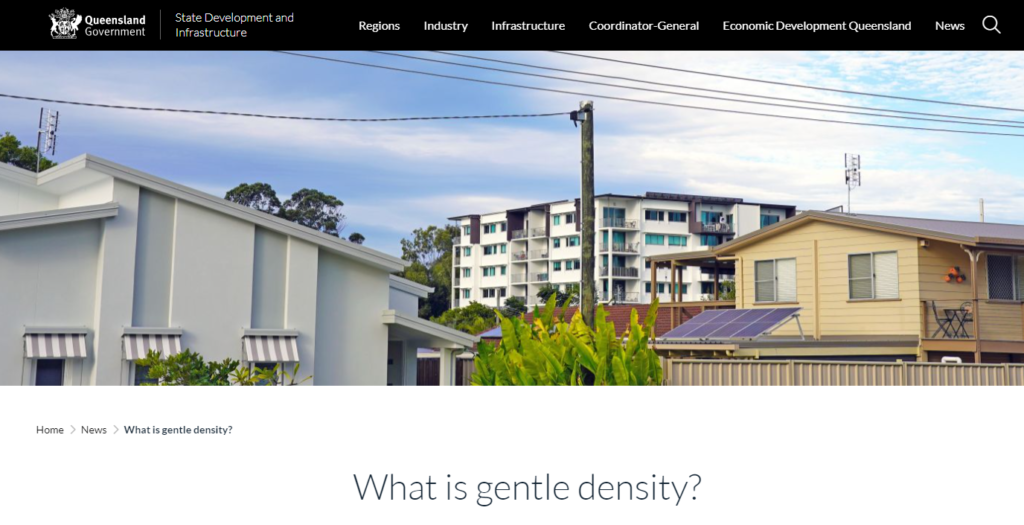
What is 'soft density'? This housing buzzword could be a key housing solution for Queensland communities
Reading time: 3 minutes Share: Many Queensland communities are already facing rapid changes in their suburbs, and terms such as "low density, high density and medium density" are often mentioned. But there is a term, "gentle density", which is described as the golden formula for solving housing supply problems.
But what does "moderate" mean in the context of density? As an urban development term, moderate density focuses on slightly increasing the number and type of housing within an existing single-family residential area. Traditional low-density zoning often includes large lots with single homes, resulting in underutilization of valuable land resources.
Moderate density can also be the redevelopment of existing sites to include multi-unit housing such as courtyard houses, quadrangle houses, or infill townhouses. This optimizes land use and provides a variety of housing types without changing the character and feel of the neighborhood.
Rather than expanding new development into the city's outer reaches where infrastructure is lacking, moderate density means building more townhouses, micro-lot homes and courtyard homes in existing densely populated areas to accommodate Queensland's growing population, said Martin Garred, a CIVITY director and Churchill Fellow.
“The concept of moderate density is really about considering generational change as our communities grow and develop,” Martin said.
"In an ideal world, we'd want everyone to be able to find housing that suits them at different stages of their life. When you retire, you want to be able to stay in the suburb you've lived in your whole life but move into something smaller and more manageable."
A European approach to housing availability In partnership with the Winston Churchill Memorial Trust, Martin investigated different approaches to housing in the UK, Denmark and Sweden. So, what can we learn from Europe's different approaches to housing? Clearly, it all starts with mindset.
"How countries around the world are dealing with the housing affordability crisis really highlights that we need to change our mindset in Australia," he said.
“As consumers, we haven’t necessarily been exposed to housing beyond single-family homes or very large apartment buildings,”
"The difference between Europe and other parts of the world is that major European cities have been exploring how to create different types of housing and actively discussing what they need."
According to Martin, Australia's approach to land use zoning affects housing choices, restricts supply and drives up prices.
Start a Conversation As the saying goes, there is no change without growth.
In addition to maintaining community cohesion, aging in place, and housing affordability, moderate density brings a range of social benefits.
Not only does having more neighbors help build community connections and social cohesion, but it also leads to investments in parks, community infrastructure, cultural districts, and more.
Despite the challenges many Queenslanders face today, Martin says we need to start a conversation with community members first.
"I guess my call to action is that next time you're at a backyard barbecue, talk about housing, talk about the different types of housing you might want to live in, because I think the first issue we face is we all have to have a collective conversation about what the future of housing in Queensland looks like," he said.
"So the decisions we make now are crucial for future generations and it's vital we don't leave a legacy of the housing crisis we face now."
As Queensland continues to grow and change, the Queensland Government is working with councils and industry to plan and deliver the housing that's most needed, creating liveable communities for all. Learn more:https://www.statedevelopment.qld.gov.au/planning/housing
How a housing buzzword might be the key housing solution for Queensland communities
Many Queensland communities are already dealing with rapid change in their suburbs, and phrases like 'low, high and medium density' are often thrown around. But one term, “gentle density” has been described as the golden formula to solving housing supply issues.
But what does 'gentle' mean in the context of density?
An urban development term, gentle density focuses on slightly increasing the number and variety of homes in existing single detached-home neighborhoods. Traditional low density zoning often consists of large lots with a single home leading to underutilization of valuable land resources.
Gentle density can also be the redevelopment of an existing site to include multiplexes like triplexes, fourplexes, or infill row houses. This optimizes land use and offers a variety of housing typologies without changing the neighborhood's character and feel.
CIVITY director, town planner and Churchill Fellow, Martin Garred, says that rather than expanding new developments on the outskirts of cities that lack of infrastructure, gentle density means building more townhouses, micro-lot houses and triplexes in existing populated areas to accommodate Queensland's booming population.
'The concept of gentle density is really about looking at generational change as our communities grow and evolve,' Martin said.
'In a perfect world, we want everyone at different stages of their lives to find housing that suits them. As you retire, you want to be able to stay in the suburb which you've lived in your whole life but move into something smaller and more manageable.'
The European way of tackling housing availability
In collaboration with the Winston Churchill Memorial Trust, Martin investigated differing housing approaches in Britain, Denmark and Sweden. So, what can we learn from housing done differently in Europe? Apparently, it all starts with mindset.
'The way different countries around the world are dealing with the housing affordability crisis really highlights how we need to change our mindset here in Australia,' he said.
'As consumers, we haven't necessarily been exposed to housing other than single family homes or really large apartment buildings,'
'The difference in Europe and other parts of the world, major European cities have been looking at how they can create different types of houses and are actively having conversations about their needs.'
According to Martin, Australia's land use zoning approach impacts housing choice, restricting supply and increasing prices.
Starting a conversation
It's often said that change doesn't happen without growth.
Aside from keeping communities together, aging in place and housing affordability, gentle density carries a range of social benefits.
Not only is having more neighbors beneficial for building community connections and social cohesion, but it also leads to investment in things like parks, community infrastructure and cultural precincts.
Despite challenges facing many Queenslanders today, Martin says we need to start a conversation with community members first.
'I think my call to action to the communities, when you go to the next barbecue in your backyard, talk about housing, talk about the different types of housing that you might like to live in, because I think the first issue that we have is we all have to have a collective kind of discussion around what the future of housing looks like in Queensland,' he said.
'So the decisions that we make now are really important for our future generations, and it's critical that we make sure that some of the legacies that we're dealing with now in terms of the housing crisis, that we don't leave that for the future as well.'
As Queensland continues to grow and change, the Queensland Government is working with councils and industry to plan for and deliver housing where it is most needed and to create liveable communities for all to enjoy. Find out more: https://www.statedevelopment.qld.gov.au/planning/housing




 Chinese