
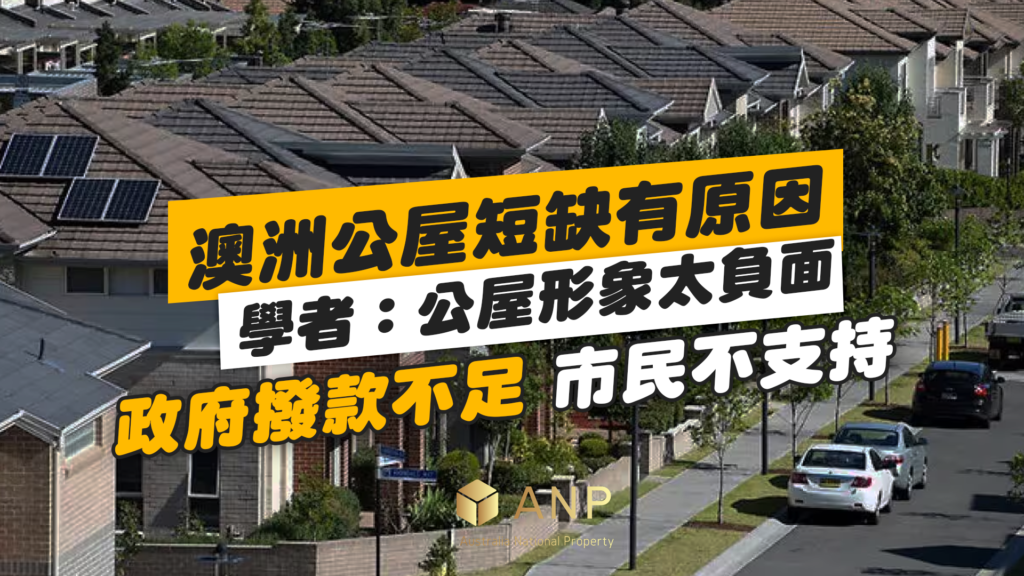
In recent years, Australian society has been calling for government investment in and the construction of more social and affordable housing. Australia has also witnessed numerous stories of housing crises and housing difficulties, such as children living in tents in the bush, single mothers left homeless by rising rents, and retirees who have worked hard their entire lives forced to sleep in their cars.
Contents Overview
ToggleFor years, experts have proposed building more social and affordable housing as a solution. However, by the end of 2023, according to the Productivity Commission, there will be only 426,582 social housing units nationwide. According to the Australian Institute of Health and Welfare, the social housing stock has only increased by 36,200 units between 2006 and 2022, an average of approximately 2,260 homes per year. In Victoria, the net number of homes added between 2018 and 2022 was only 74.
What are social housing and affordable housing?
Firstly, it is important to be clear that social housing and affordable housing are not the same.
Social housing is government-subsidized housing for low-income and vulnerable groups, including:
- Government-owned and managed public housing
- Community housing, managed and owned by nonprofit organizations, is allocated based on demand, which has risen sharply in recent years.
Affordable housing is more difficult to define, as it varies from state to state. Generally speaking, it is a transitional option between social housing and the private sector, sometimes offered through public-private partnerships.
The government is inclined to encourage citizens to buy homes
Political will and investment (or lack thereof) are among the primary reasons for the shortage of social and affordable housing. Michael Fotheringham, General Manager of the Australian Housing and Urban Research Institute, stated that governments at all levels have severely underinvested in social and affordable housing for many years. Furthermore, governments have in recent years tended to target housing assistance towards first-time homebuyers, introducing various grants.
Furthermore, new housing will still take time to build. The construction system has been disrupted since the start of the pandemic. Materials such as timber frames and high-quality concrete have become difficult to obtain in the past few years. A 2022 study by Swinburne University of Technology predicted that without significant improvements in the provision of social and affordable housing, the cost could exceed A$1 billion a year by 2036 due to increased spending on homelessness, health and justice services. Productivity Commission data also showed that spending on emergency homelessness services was close to A$1.4 billion in 2022-23, an increase of more than A$30% over the past four years.
Residents oppose the construction of public housing nearby
One of the most discussed and debated barriers to development is the NIMBY (Not in my backyard) phenomenon, where local residents object to development in their area. For social housing, this is often because they worry about the impact on the value of their own homes.
Solving a "wicked problem" Australia's housing problem looks unlikely to ease significantly by 2024. New public housing projects are coming online, but they will be a drop in the bucket for many low-income Australians currently experiencing housing stress. The Australian government still has a long way to go to expand the supply of social and affordable housing.



 Chinese