

Under the dual pressures of high property prices and a tight supply of affordable housing, the Australian real estate market has recently seen an unusual trend: "problem properties," once considered undesirable, dilapidated, or even uninhabitable, have become a hot commodity among investors in recent months. In Brisbane in particular, these properties are attracting a large number of buyers.
Contents Overview
ToggleRenovation potential drives market enthusiasm, with bids placed without even inspecting the property.
According to reports, some of the "problem houses" traded in the auction market even attractedBuyers bidding without viewing the property interior, reflecting the extremely tight market supply. Intermediary agencies revealed thatCompetition for these properties is fierce, with each auction attracting an average of 6 to 10 buyers., much higher than the average level in the past.
One of the sales was in Lakemba, southwest Sydney, where a property listed as "uninhabitable" due to roof damage and exposed wiring was sold for A$830,000.Higher than the estimated price by about 12%The buyer is a seasoned investor who plans to invest $150,000 in renovations before reselling.
Four reasons why distressed housing is a hot investment
The rapid rise in the number of “problem housing” in recent years is due to a number of factors:
- Low entry threshold: Compared with new net properties in the same location, the entry price of problem houses is 20–40% lower, making it easier for small and medium-sized investors to deploy.
- Clear renovation potential: Many properties are located in prime locations and are undervalued simply because they have fallen into disrepair. Their market value can be significantly increased after renovation.
- fastImprove rental returns: In a tight rental market, renovating rental units can quickly generate profits, with returns ranging from 5–6%.
- expandProfit margin: For developers or renovation teams, such properties can be rebuilt, merged or expanded, which can generate greater profit margins.
Investor calculations: low barriers to entry, high returns
The key reason why investors flock to this type of asset is its combination of "low entry price and high potential returns". For example, a dilapidated property in Sydney's inner west was purchased for only A$1 million, but is expected to resell for more than A$1.5 million after renovation.Capital appreciation potential of 50%.
In addition, according to CoreLogic data, national residential property prices will rise by 8.8% in 2024, of whichSydney's annual growth reached 11.1%This imbalance in supply and demand has led investors to turn their attention to refurbished properties to fill the market gap.
Potential risks should not be ignored; choosing the right location is crucial
Although the return space is considerable, experts remind thatRenovation costs and construction risks cannot be ignoredBased on current building material and labor costs in Australia, renovating an old property costs an average of A$100,000 to A$250,000. If asbestos or structural problems are discovered during the renovation process, or if there are delays in obtaining approvals, the overall cost may exceed the original estimated budget by more than 30%.
While troubled properties offer potential for renovation and returns, experts warn buyers to be mindful of the associated risks, including:
- Renovation costs can exceed budgets, with an average investment of A$100,000 to A$250,000 per project.
- Regulatory approvals take a long time, which may cause project delays if cash flow is not reserved;
- If the location is not chosen properly, it will be difficult to resell or rent out even after renovation.
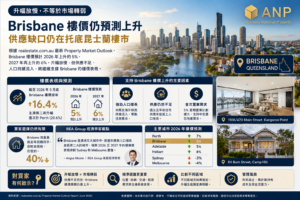
The industry recommends that investors should focus on Brisbane's inner and middle ring areas such as Paddington, Red Hill and Camp Hill. These areas combine living functions, transportation facilities and long-term appreciation potential, making them popular choices for renovation investment.
Structural trends behind market phenomena
The craze for "distressed homes" reflects the contradiction between high housing prices and chronically tight land supply in Australia's first-tier cities. In high-growth markets like Brisbane, renovation investments have become a key channel for new capital to enter the market. When investing, investors should carefully select locations and estimate costs, while also integrating a long-term development plan to achieve steady success.



 Chinese