

Australian land prices have soared to record highs, outpacing the Consumer Price Index (CPI) and five times the increase in building material costs, according to the latest Housing Industry Association (HIA)-CoreLogic Residential Land Report.
Contents Overview
ToggleLand price growth outpaces economic growth
The report shows that as of the September quarter of 2024, the median land price in Australia is A$366,500, an increase of 7.6%The report analysed 52 property markets across the country, including the six major capital cities.
HIA Economist Tapang He said that land price growth has far outstripped overall economic growth: "Land prices have risen at twice the rate of the CPI, and five times the rate of increase in construction material costs."
"The areas where prices are rising fastest are generally where residential construction is starting to pick up, or where the infrastructure costs required to develop new land are high." Tapang added.
Capital cities drove growth, with Brisbane and Perth leading the way.
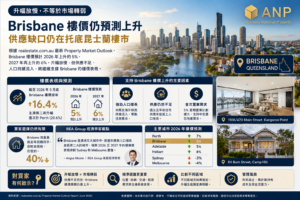
Land prices in capital cities led the way, with overall median prices rising year-on-year 9.2%, Da AUD 408,200Among them, land prices in Brisbane and Perth rose 21.2% and 38.6%, becoming the fastest growing city in Australia.
In Sydney, median land prices rose despite the pace of residential construction lagging behind other capital cities. 7.2%, Da AUD 710,000The HIA NSW branch said Sydney's high land prices reflected housing affordability at a "historic low". Armitage Criticism of the New South Wales government's stamp duty policy for increasing the pressure on home buyers.
"Land prices are high and stamp duty is an additional barrier." "Currently, first-home buyers are finding it difficult to qualify for the subsidy, even in regional areas," Armitage said. "The government should adjust the stamp duty concession threshold to reflect the latest land and property prices."
The regional market is relatively stable and low-priced locations are attracting investors
In contrast, land prices in regional Australian markets remain relatively affordable, with median prices only rising 2%, Da AUD 281,900Tapang said that despite the increase in land prices, the regional market still attracted many buyers, and some investors began to look for cheaper land options.
“Buyers are looking to explore growing regional markets or purchase smaller plots of land.” "In areas like the Illawarra and Geelong, where land prices are lower than in the capital cities, land sales have surged year-on-year," Tapang said. 50% above. "
Housing supply shortage may affect government housing construction targets
The shortage of land supply continues to affect housing construction. Tapang warned that the land shortage problem may hinder the government from achieving Build 1.2 million housing units within five years goal.
National housing construction is behind schedule, according to the latest construction activity data from the Australian Bureau of Statistics (ABS). 15,000 setsTo meet the standards, Australia must build 60,000 sets residential, but only completed in the September 2024 quarter 44,884 units.
Tapang called on the government to speed up the release of residential land: "Only by more actively providing infrastructure and releasing more land can we effectively alleviate the pressure of rising land prices and enable more Australians to realize their dream of home ownership."
Dual pressures on construction costs and interest rates drag down new home supply
CoreLogic economist Ezzy The report points out that housing affordability is becoming an increasingly serious problem: "Continued increases in land prices, coupled with pressures on construction costs and a long-term high interest rate environment, have hindered the supply of new homes, making it difficult for many Australians to buy a home."
ABS data shows that as of November 2024, the number of residential approvals in Australia is 169,000 cases, only increased annually 0.5%, but still lower than the average of the past decade 17.8%To achieve government targets, annual approval is required. 240,000 cases Residential construction.
Ezzy added: “As the backlog of demand from the HomeBuilder program is worked through, some builders are facing a decline in new orders. The latest ABS data shows that dwelling prices recorded a -0.6% The monthly decline suggests some builders are using discounts and promotions to attract customers."
"If the government does not expedite its actions to release land, future housing supply will be further constrained, causing Australian property prices to rise further." Ezzy warned.
Analysis of land price concept and investment strategy
For Hong Kong readers, there is a significant difference between Australia’s “land prices” and Hong Kong’s “property prices”. Hong Kong’s residential market is characterized by **“pre-sale”and the "secondary market", while Australia's real estate market includesThe sale and purchase of land and completed residential properties.
In Australia, buying land is usuallyThe first step in building a house. Buyers can choose to purchase vacant land and then build their own home, or purchase both the house and land at once through a "House & Land Package." Therefore, land prices often reflect local infrastructure development, population growth, and government planning., and have a direct impact on future housing prices.
For Hong Kong residents interested in investing in Australian real estate, the following strategies are worth considering:
1️⃣ Select regions with growth potential – For example, the report mentionedBrisbane and Perth, the land price has increased significantly, indicating that the market demand is strong and suitable for medium and long-term investment.
2️⃣ Consider Regional Markets – If your budget is limited, you can look at regional markets such as Geelong and Illawarra. These areas offer lower land prices than capital cities, but have high development potential, making them suitable for small and medium-sized investors.
3️⃣ Pay attention to government infrastructure and land supply policies – Land supply is affected by government planning. If a region has new infrastructure (such as railways or highways) or the government releases more residential land, it is expected to drive up land prices in that area.
4️⃣ Understanding holding costs and stamp duty policies – Australian land investment involves costs such as **Land Tax, Council Rates and Stamp Duty**. Investors need to assess whether the holding costs are reasonable.
In general, land prices are closely related to property prices. As the Australian government promotes housing construction and population growth, land values are expected to continue to rise. For Hong Kong investors who are interested in entering the Australian market, choosingRegions with well-developed infrastructure and high growth potential, and making good long-term plans will be the key to success.



 Chinese