
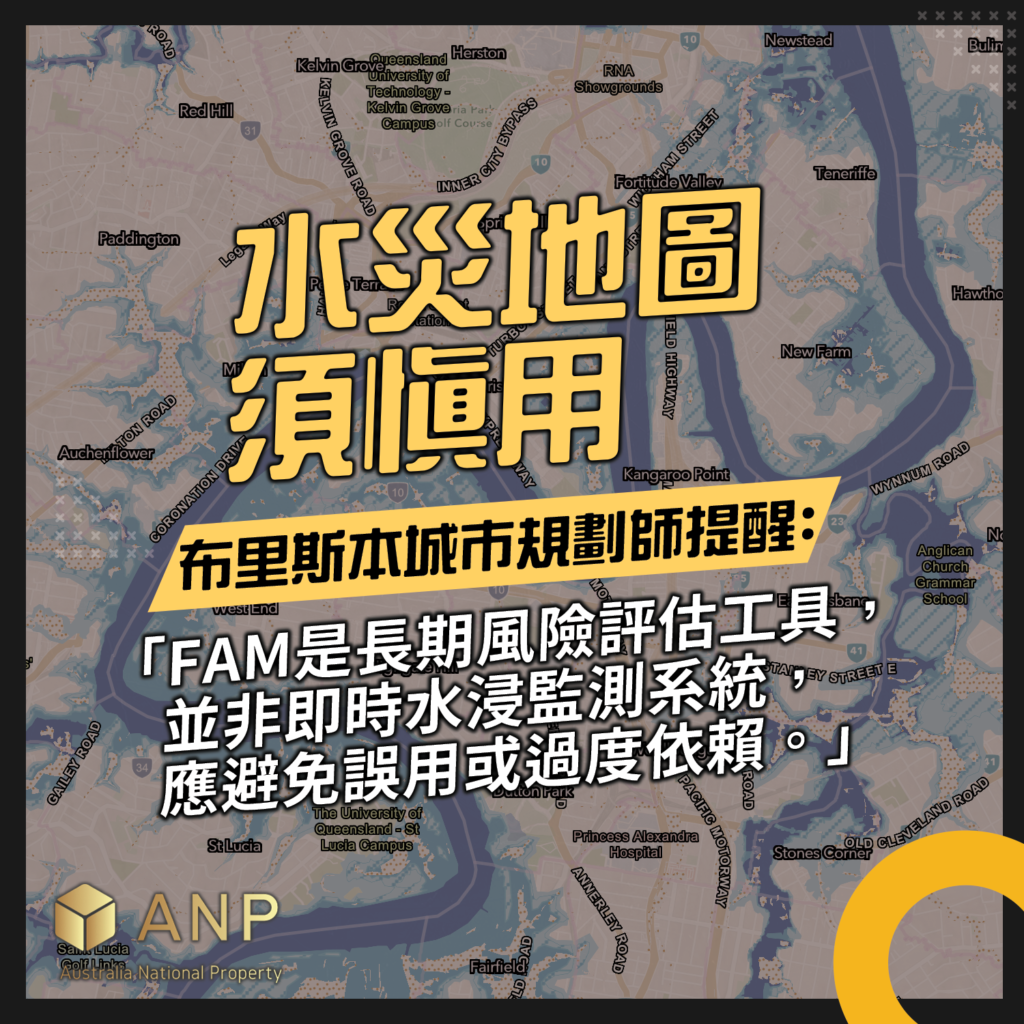
📢 Brisbane is approaching a storm, so use the Flood Awareness Map with caution🌊🌪️
Contents Overview
ToggleThe Flood Awareness Map has been circulating in many WhatsApp groups recently. Dawn, an urban planner from Hong Kong, reminds the public that while planners do use this tool to understand flood risks, it is a "long-term risk assessment tool" rather than an immediate flood monitoring system, and should be avoided from misuse or over-reliance.
Correct Use of Flood Awareness Maps
The Flood Awareness Map uses historical data and flooding models to show flooding risk levels in different parts of Brisbane. It is suitable for:
✅ Assess long-term residential risks (e.g., whether the property is located in a historical flooding area)
✅ As a consideration when buying or renting a house
✅ Assist in planning flood prevention measures (such as installing waterproof barriers and raising building foundations)
🌀However, extreme weather events (such as the 2022 Brisbane floods) can break past records!
🛑 Due to urban drainage problems, some areas may experience overland flow flooding, but small areas of waterlogging may not be fully displayed on the map.
📍 Low-lying areas are more susceptible to stream flooding, especially when heavy rain and high tide occur simultaneously.
However, this map is not a real-time flood warning, nor does it indicate whether a particular area will or will not be flooded. Flood risk is affected by many factors, including rainfall intensity, tides, and drainage conditions. Therefore, it should be combined with other real-time information, such as the Bureau of Meteorology (BOM) weather warnings (🔗 www.bom.gov.au).
Practical advice during a storm
In addition to referring to the Flood Awareness Map and preparing supplies, citizens should take practical measures to address short-term risks, including:
🔹 1. Help your neighbors
Take the initiative to contact neighbours, especially elderly people living alone or those with mobility difficulties, to ensure they can support each other in an emergency.
Know the location of emergency shelters in your community and assist with evacuation when necessary.
🔹 2. Pay attention to official real-time flood forecasts
Follow the Australian Bureau of Meteorology (BOM) live forecast to ensure you get the latest storm updates.
Make a note of Brisbane City Council's disaster alert notification number (📞 13 74 68).
🔹 3. Check your living environment
Clean the drainage system and check whether outdoor drainage ditches are clear to reduce the risk of water accumulation.
Ensure outdoor objects are secured to prevent strong winds from damaging them or blocking drains.
🔹 4. Safely manage vehicles
If you live in a low-lying area or basement car park, you should consider parking your vehicle on higher ground to prevent water damage.
Avoid driving through flooded roads during heavy rain, as even seemingly shallow water can be life-threatening.
in conclusion
Flood Awareness Maps are a valuable tool for assessing long-term flooding risks, but they should be paired with real-time information and practical response measures to ensure safety. In the face of an impending storm, stay connected to your community, monitor official warnings, ensure drainage is flowing, and respond quickly when necessary.
# Brisbane# Brisbane




 Chinese