
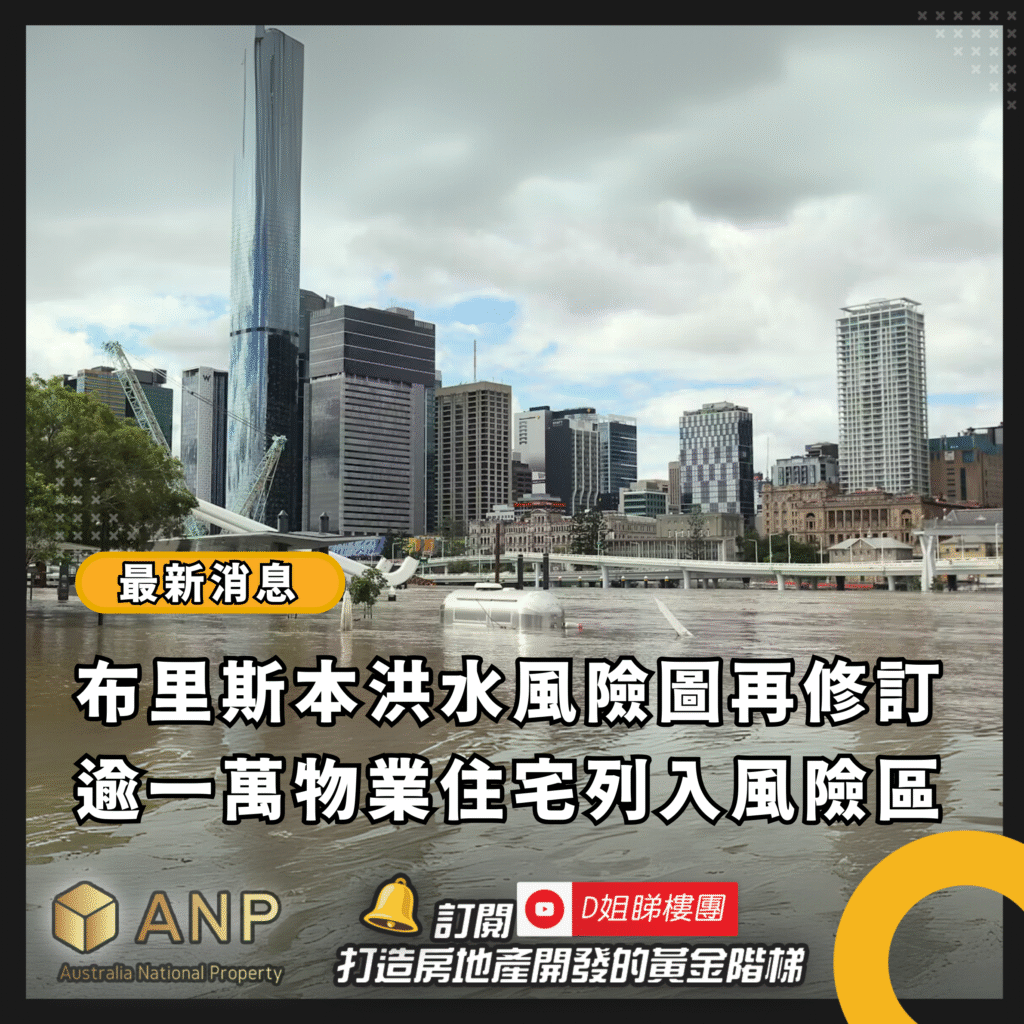
Brisbane City Council recently announced the results of its latest flood map overlay revisions, impacting over 17,000 properties. Over 10,000 properties have been added to the flood risk zone for the first time, while over 2,000 have had their risk levels increased. Only approximately 400 properties have been removed from the overlay. The revised map, which will be incorporated into the City Plan on September 19, 2025, will have far-reaching implications for local residents, property owners, and the insurance market.
Contents Overview
ToggleResearch background and scope of revision
The council noted that the revisions were based on a study completed in 2024 covering the Breakfast Creek, Jindalee and Lota Creek catchments. The study combined the latest hydrological data with computer modelling to produce a more detailed flood risk map.
New properties: 10,129 properties were included in flood risk areas for the first time.
Risk Upgrade: The risk level of more than 2,000 properties has changed from low to medium, or from medium to high.
Risk downgrade: 400 properties were removed from the risk layer due to terrain or data updates.
The move is one of the largest revisions to Brisbane's flood maps in recent years.
Flood sources and limitations
The Council explained that the amendment only covers creek and waterway flooding, and does not include:
Brisbane River(Brisbane River) flooding;
Overland flow(surface runoff) flood.
However, during the 2022 floods, surface runoff caused widespread damage, and many community residents questioned why it was not included in the latest layer. Experts believe that surface runoff is difficult to accurately predict through modeling alone, but its omission may have led residents to misjudge the actual risk.
Flood risk level
The council's flood risk is divided intoFour levels:
High: Annual probability 5% (once in 20 years)
Medium: 1% (once in 100 years)
Low: 0.2% (once in 500 years)
Very Low: 0.05% (once in 2000)
Some of the newly added properties are classified as "one in 2000 years" and have a very low probability of occurrence. The council stressed that residents should not panic, saying the revisions are intended to enhance transparency and community preparedness, not to directly equate to insurance ratings.
Insurance and real estate market focus
Tracy Davis, the council's member for environment, landscapes, and sustainable development, noted that the council has formally written to the insurance industry, emphasizing that the updated flood maps are scientifically based and should not be abused to justify significant premium increases. She bluntly stated, "Some of the newly included properties are extremely low-risk and should not result in owners being burdened with unreasonable premium pressures."
Market reaction and potential impact
The Brisbane insurance market has seen a trend of rising premiums over the past few years, a trend particularly pronounced following the 2022 floods. As more properties are added to the risk zone, how insurers adjust their ratings will directly impact homeownership costs, potentially impacting property transaction volumes and valuations.
A real estate agent admitted to the media that once an area is listed as high-risk, it often deters buyers and affects the liquidity of the area.
Distribution of affected communities
This revision focuses on three major stream basins:
Breakfast Creek catchment: covers Albion, Windsor, Lutwyche and other areas;
Jindalee: Located in Centenary Suburbs, it has always been a flood-focused area;
Lota Creek Watershed: Involves the Lota and surrounding wetland communities.
Residents will receive written notification from the council in the coming weeks with an update on the risk status of their properties.
Expert and community response
Experts generally agree that the revision of flood risk maps is a necessary measure and can serve as an important basis for long-term urban planning. However, some question whether the revision is too narrow in scope, omitting to consider surface runoff and potentially underestimating the overall risk.
At the community level, some homeowners whose homes were first listed in the risk zone are concerned about falling property values and criticize the authorities for "coming too late to notify." Other residents say that while the risk level is a "once-in-2000" event, once it's included in real estate reports, it could still affect bank loans and insurance.
Background and Policy Significance
Brisbane suffered severe flooding in 1974, 2011, and 2022, resulting in billions of dollars in economic losses. Since then, the City Council has been implementing its Flood Awareness Program, using modeling, public data, and updated maps to help residents better understand their risks.
This update comes as Queensland and Australia face the challenges of increased extreme weather events. Besides enhancing transparency, the revision is also a key component of Brisbane's resilience and infrastructure adaptation to climate change.
Professional Advice
For overseas buyers and local investors, flood risk has become one of the most important factors in assessing the value of Brisbane properties. With the new round of risk map revisions, the property trends between different communities may become more differentiated. To make an accurate judgment between risk and potential,The assistance of professional consultants is indispensableTherefore, more and more investors choose to seek ANP With the assistance of our team, we have not only experienced real estate consultants, but alsoTown Planner, can combine real estate data analysis, planning policy research and on-site inspections to provide you with professional advice, safeguard your investment while exploring potential opportunities.




 Chinese