

Australia's population grew by 2.51 trillion yuan in the 12 months to September 2023, driven mainly by record levels of overseas migration. According to the latest data from the Australian Bureau of Statistics (ABS), the population grew to 26.8 million last year, an increase of 659,800 people in 12 months, with net overseas migration accounting for 831 trillion yuan of that growth.
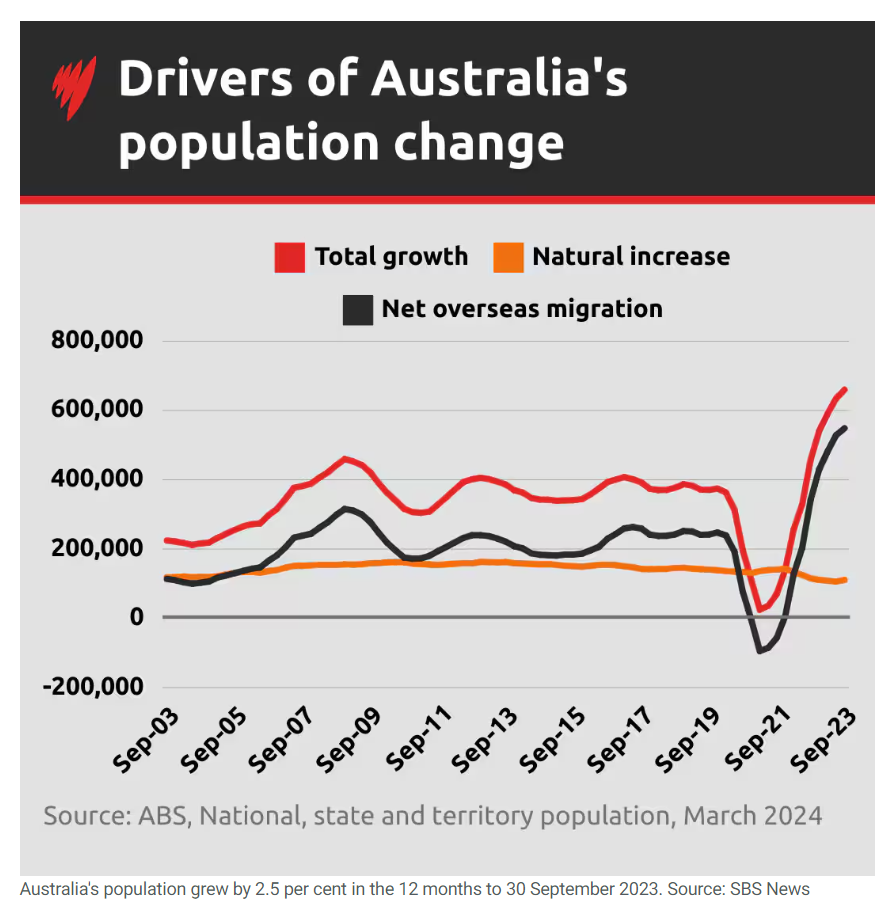
"Compared to last year, net overseas migration increased by 60%, mainly due to a 34% increase in overseas migrant arrivals, most of whom were on temporary visas for work or study," said Beidar Cho, head of demography at the Australian Bureau of Statistics.
During the same 12-month period, Australia registered 295,000 births and 183,900 deaths, leaving a natural population increase of just 111,000, down 391,000 from the previous year.
New South Wales is the most popular state for overseas immigrants
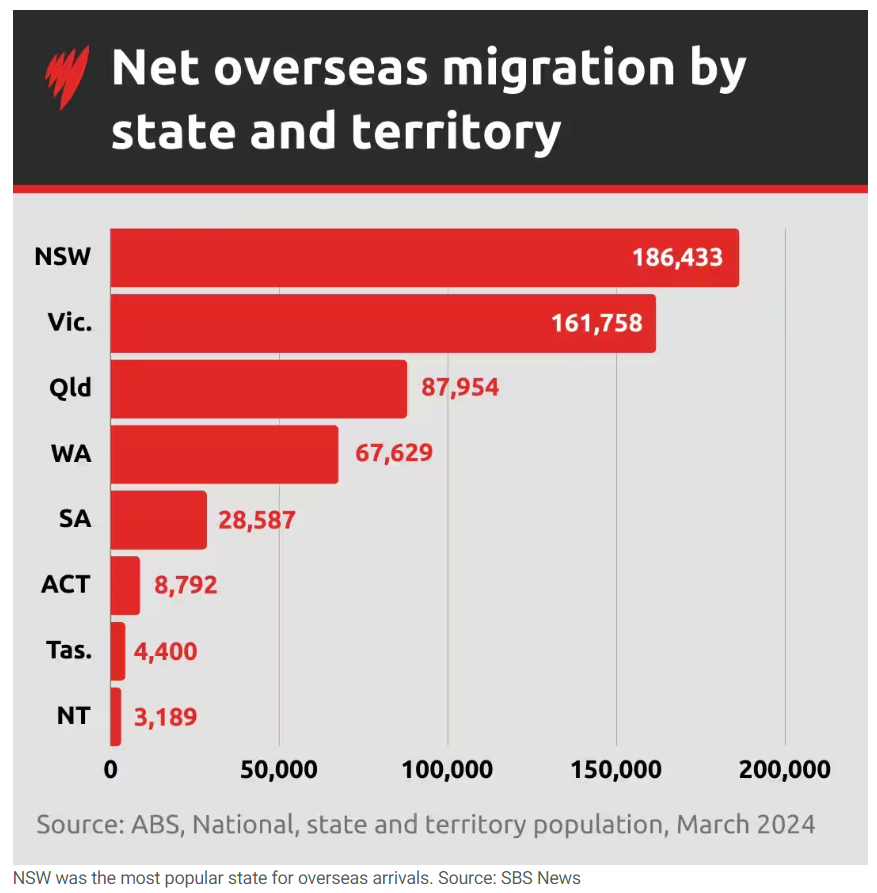
New South Wales had the highest net increase in overseas migration at 186,433, followed by Victoria (161,758) and Queensland (87,954). The Northern Territory had the lowest level at 3,189. New South Wales was the most popular state for overseas arrivals.
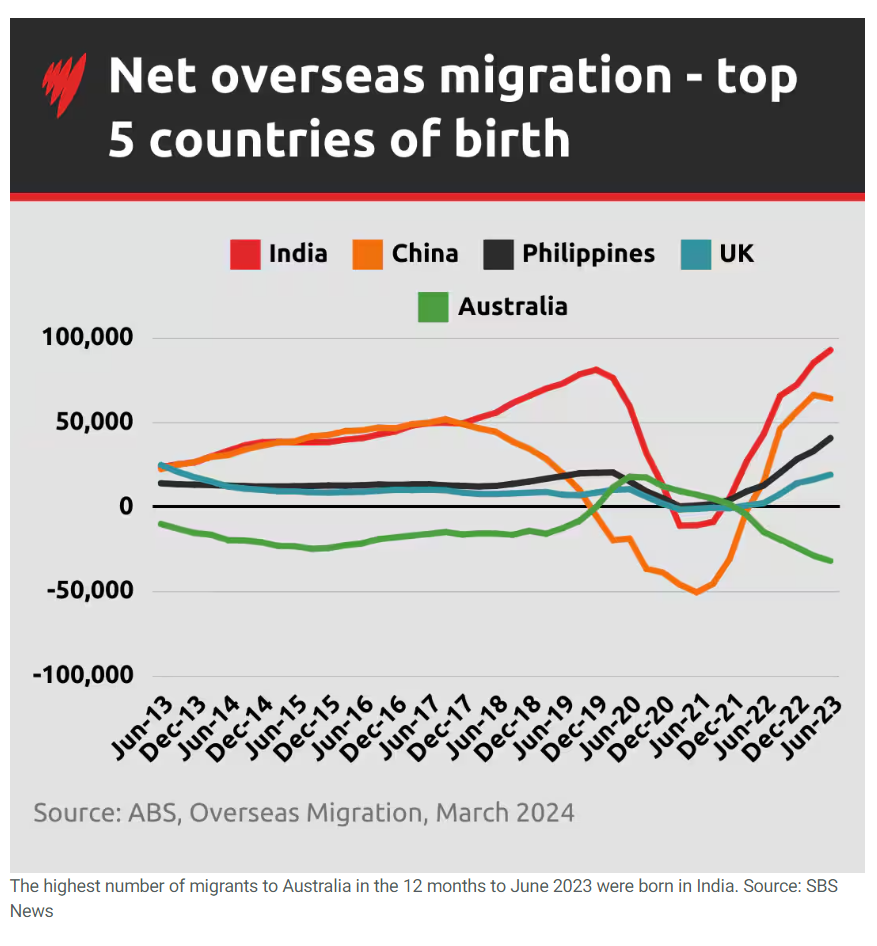
In terms of net inflow, the largest number of people came from India, followed by China, the Philippines and the United Kingdom. Returning Australians ranked fifth.
Queensland is the favorite place for local Australians
Which states and territories are people moving, and where are they going? High levels of overseas arrivals mean every state and territory has seen positive population growth, but some states have lost more residents due to interstate migration.
Queensland continues to be the most popular destination for Australians to move to, with the state's population growing by 32,625 people through interstate arrivals in the year to September 2023.
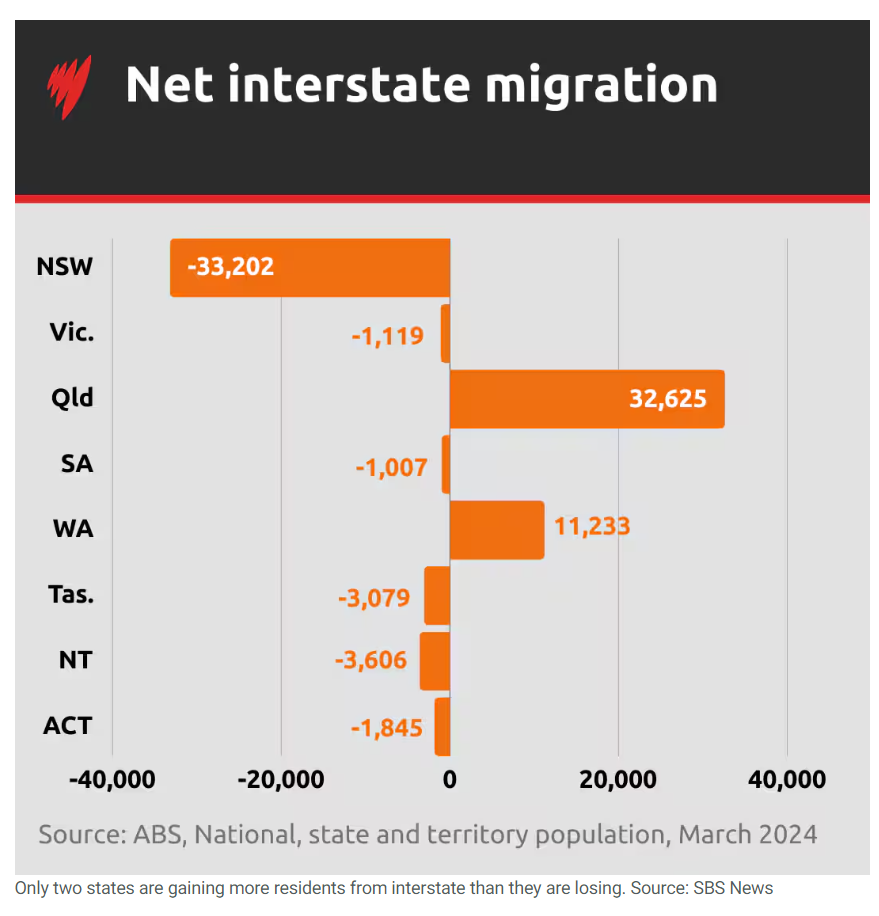
Western Australia came in second with an increase of 11,233 residents, while New South Wales was the least popular, losing 33,202 people to other parts of the country. Only two states gained more residents from interstate than they lost. Source: SBS News Overall, Western Australia had the fastest population growth, increasing by 3.3% over the previous year.
Victoria came in second with a growth rate of 2.91 TP3T, followed by Queensland at 2.71 TP3T, while Tasmania had the slowest growth rate at just 0.31 TP3T.
Brisbane's steady growth driven by population growth
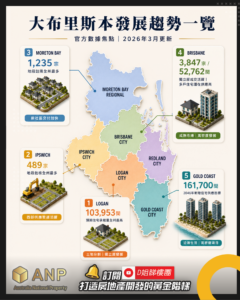
Population growth data from the Australian Bureau of Statistics reveals a key driver of increased demand for housing in Queensland. Australia's population grew significantly in 2023 due to high levels of overseas migration, with Queensland becoming a preferred destination for many new immigrants and domestic migrants due to its pleasant climate, low cost of living and high quality of life.
Meanwhile, in 2023, Brisbane's median annual house price surpassed Melbourne's for the first time, reaching A$787,000, marking a significant turning point since 2010. Even in the face of five interest rate hikes, Brisbane's real estate market has demonstrated strong resilience against market conditions, maintaining a steady upward trend.
Queensland's capital city saw residential property value growth of 13.11% per 3T over the year, the second-highest growth among all states, behind Perth's 15.21% per 3T. This growth rate far outpaced other capital cities, many of which remain below their previous highs, such as Sydney, Melbourne, Hobart, Darwin, and Canberra. Brisbane's rental growth for both houses and units exceeded the national average, and this trend is expected to continue.




 Chinese