
According to the latest report, the affordability of Australian houses has fallen to its lowest level in 20 years, and interest rate hikes have put great pressure on buyers.Real Estate Institute of Australia The Housing Affordability Report from the Housing and Urban Development Board shows that housing affordability has now reached crisis levels, with the proportion of income required to repay the average loan rising to 47.71t/3t, an increase of 2.11t/3t.
The most difficult time to buy a house in the country in the past 20 years
Housing affordability declined in all states and territories during the December quarter, with the exception of the Northern Territory, where it remained stable. Tasmania experienced the smallest decline in affordability, at 0.51 TWh/3T, while Queensland experienced the largest decline, at 2.81 TWh/3T.
Housing affordability is at its lowest point in 20 years in New South Wales, Victoria, South Australia, Tasmania and the Australian Capital Territory.
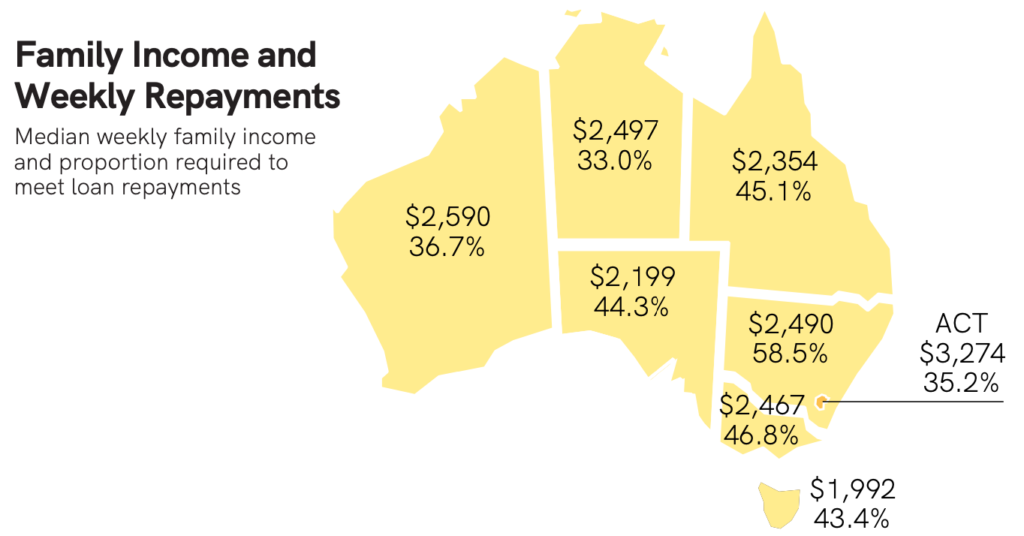
REIA chairwoman Leanne Pilkington said it was unsurprising that housing affordability was at its worst level since the REIA started publishing the HAR, given the cash rate was set to be $4.35% in December 2023.
"Nationally, housing affordability has fallen significantly by £2.71tpa over the quarter, with the average household now spending £47.71tpa on mortgage repayments," Ms Pilkington said.
"We would only see a change in that outlook if interest rates were cut."
"However, nationally, the proportion of income needed to meet the median rent rose by 0.3 percentage points to 23.9%."
"This means rental affordability has decreased in most states: Victoria, Queensland, South Australia, Western Australia, Tasmania and the Northern Territory."
Ms Pilkington said only a significant increase in rental supply would change that outlook.
“Perhaps in response to tough rental conditions, this quarter showed positive results for more motivated entry-level buyers,” she said.
"The number of first-home buyers increased to 31,445, an increase of 16.8% compared to the previous quarter and an increase of 12.8% compared to the December 2022 quarter."




 Chinese